






What's Happening?
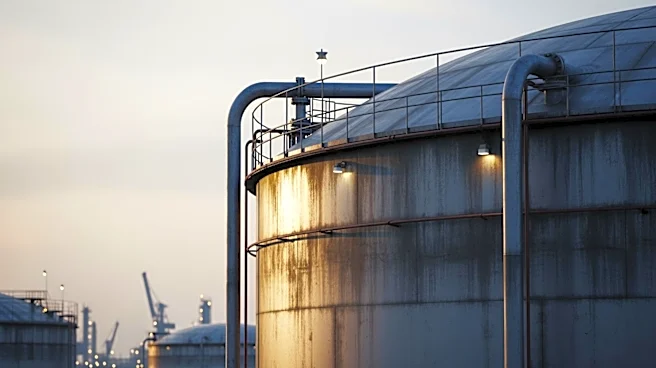
China is expected to restock its oil reserves, but the process may take longer than anticipated, according to Cory Combs from Trivium China. The delay is attributed to a structural plateau in oil demand within the country. While transportation-driven
demand is declining, it is not being sufficiently offset by the increasing need for industrial chemicals. Combs highlights the differences between China's commercial and strategic petroleum reserves and notes the impact of losing its monopsony on sanctioned global crude. This development comes as China navigates changes in its energy consumption patterns and adjusts its strategies for oil reserve management.
Why It's Important?
The delay in restocking China's oil reserves has significant implications for global oil markets and U.S. energy stakeholders. As one of the largest consumers of oil, China's purchasing patterns can influence global oil prices. A slower restocking process may lead to reduced demand, potentially stabilizing or lowering global oil prices. This could benefit U.S. consumers and industries reliant on oil, but it may also impact U.S. oil exporters who rely on strong demand from China. Additionally, the shift in China's energy consumption patterns could signal broader changes in global energy markets, affecting long-term strategies for U.S. energy companies.
What's Next?
China's approach to managing its oil reserves and adjusting to changing demand patterns will be closely watched by global energy markets. Analysts and industry stakeholders will monitor how China balances its commercial and strategic reserves and how it adapts to the evolving energy landscape. Potential reactions from major oil-producing countries and companies could include adjustments in production levels or shifts in export strategies to accommodate changes in Chinese demand. The U.S. energy sector may also need to consider these developments in its strategic planning and market forecasts.