







What's Happening?
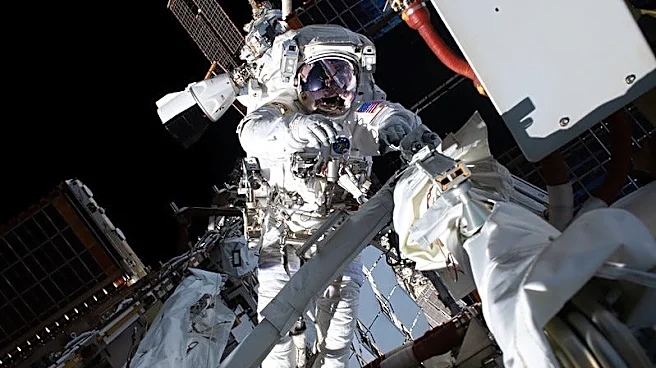
In March 2024, a 1.6-pound piece of space debris, identified as a stanchion from NASA flight support equipment, re-entered Earth's atmosphere and struck the home of the Otero family in Naples, Florida. The object, which was part of a 5,800-pound battery
pallet jettisoned from the International Space Station in 2021, penetrated the roof and two floors of the residence. NASA had predicted the entire pallet would burn up during re-entry. The Otero family subsequently filed a domestic claim against NASA, seeking over $80,000 for property loss, business interruption, and emotional distress. Their homeowner's insurer also sought recovery for repair payments. NASA ultimately settled the claim on November 22, 2024, paying a total of $44,151.22 to the family members and their insurer, without admitting fault or liability. This incident highlighted the complexities of international space law, particularly the 1967 Outer Space Treaty and the 1972 Liability Convention, which primarily hold launching states responsible for damage caused by space objects, rather than providing a direct international claim mechanism for individuals against private companies or agencies.
Why It's Important?
This incident is important because it underscores a significant procedural gap in existing international space law, particularly as commercial space activities proliferate. While the Otero family received compensation through a domestic U.S. administrative process, the case revealed that individuals do not have a direct international claim against the entities responsible for falling space objects. The current legal framework, established when spaceflight was predominantly governmental, places international responsibility and liability on states. This means that a victim's government must decide whether to present a treaty claim, and domestic law dictates whether an agency, operator, insurer, or contractor can be pursued directly. This patchwork system creates ambiguity and potential challenges for victims, especially when multiple international and private entities are involved in a single space mission. The incident also prompts a re-evaluation of re-entry modeling, as NASA's prediction of complete destruction for the battery pallet proved inaccurate, indicating a need for updated engineering models to better assess the risks of space debris.
What's Next?
Following the incident, NASA stated that the International Space Station program would investigate why the stanchion survived re-entry and update its engineering models where necessary. This investigation is crucial for improving future predictions of space debris re-entry and mitigating risks to populated areas. The settlement with the Otero family, while providing compensation, did not establish a legal precedent for negligence in domestic debris strikes, meaning future similar incidents might still be handled on a case-by-case basis through administrative processes. The broader implications suggest a potential need for international discussions to modernize space law, adapting it to the increasing involvement of private companies in space activities. This could involve exploring mechanisms that provide more direct avenues for individuals to seek compensation or clearer guidelines for liability allocation among the various actors in a complex space mission, including manufacturers, owners, operators, and launching states.
Beyond the Headlines
The Florida incident brings to light the ethical and legal challenges posed by the growing volume of space debris and the increasing privatization of space exploration. The current state-centric international legal framework, while providing a basis for liability, struggles to address the nuances of a multi-stakeholder space environment. The lack of a direct international claim for individuals means that compensation for damages often depends on the domestic laws and administrative processes of the affected country, creating potential inequities and complexities. This situation could lead to calls for a more robust and accessible international legal framework that directly addresses the rights of individuals impacted by space activities. Furthermore, the incident highlights the broader issue of orbital debris management and the responsibility of spacefaring nations and private entities to ensure the safe de-orbiting or disposal of space objects. The unexpected survival of the stanchion also raises questions about the accuracy of current re-entry prediction technologies and the need for continuous advancements to protect life and property on Earth.