

What's Happening?
The Intelligence Organization of the Islamic Revolutionary Guard Corps (IRGC) has issued a statement indicating its primary concern is the potential for widespread dissatisfaction within Iran to escalate into street protests. The IRGC claims that adversaries
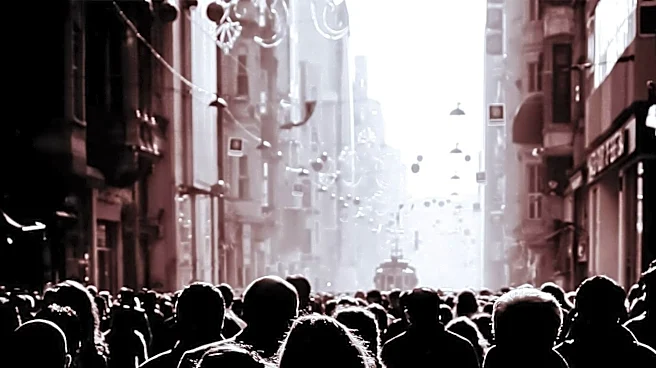
have shifted their strategy from military pressure to exploiting domestic shortages, promoting dissatisfaction, and inciting public unrest. This admission suggests that the Iranian regime views internal grievances, rather than solely foreign conspiracies, as a significant threat to its stability. The statement highlights the regime's fear that economic hardship and public criticism could transform into widespread street demonstrations, similar to past uprisings. This concern comes amidst reports of worsening fuel shortages across Iran, with motorists experiencing long gasoline lines and stations running out of fuel, and senior officials discussing potential changes to gasoline and diesel prices.
Why It's Important?
The IRGC's statement underscores the Iranian regime's deep-seated fear of internal dissent and its potential to destabilize the country. This focus on domestic unrest, rather than external threats, reveals a critical vulnerability for the regime. The acknowledgment that foreign adversaries are exploiting existing domestic issues suggests that the regime recognizes the legitimacy of some public grievances, even if it frames them as externally manipulated. The reported fuel crisis and discussions about price changes could exacerbate public dissatisfaction, potentially leading to the very street protests the IRGC fears. For the U.S., understanding this internal dynamic is crucial, as it indicates that economic pressures and public discontent could be more effective in influencing the regime's behavior than direct military confrontation. The situation highlights the delicate balance the regime must maintain between addressing public needs and suppressing dissent, with potential implications for regional stability and international relations.
What's Next?
The Iranian regime is likely to intensify its efforts to prevent and suppress any potential street protests. This could involve increased surveillance, arrests of alleged organizers, and stricter controls over information flow. Simultaneously, the government may attempt to address some of the economic grievances, such as the fuel shortage, to mitigate public anger. However, any significant policy changes, particularly regarding fuel prices, could be met with further public backlash. The regime will also likely continue to attribute domestic unrest to foreign interference, using this narrative to justify its repressive measures. The international community will be closely watching for any signs of escalating protests and the regime's response, which could further impact human rights and political freedoms in Iran. The ongoing economic challenges, coupled with the regime's fear of internal uprising, suggest a period of heightened tension and potential instability within the country.
Beyond the Headlines
The IRGC's concern about domestic unrest points to a deeper struggle within Iran: the regime's legitimacy and its ability to govern effectively in the face of widespread public dissatisfaction. The emphasis on 'inciting people to extend dissatisfaction to the streets' reveals a recognition that the grievances are real, even if the regime attributes their amplification to external actors. This internal focus suggests a shift in the regime's perceived threats, moving beyond traditional military confrontations to the more insidious challenge of a disaffected populace. The long-term implications could include a further tightening of state control, increased human rights abuses, and a deepening divide between the government and its citizens. The situation also highlights the ethical dilemma for international actors: how to support the aspirations of the Iranian people for change without inadvertently strengthening the regime's narrative of foreign interference. The economic hardships, particularly the fuel crisis, serve as a tangible manifestation of the regime's governance challenges, potentially leading to a critical juncture in Iran's political trajectory.