





What's Happening?
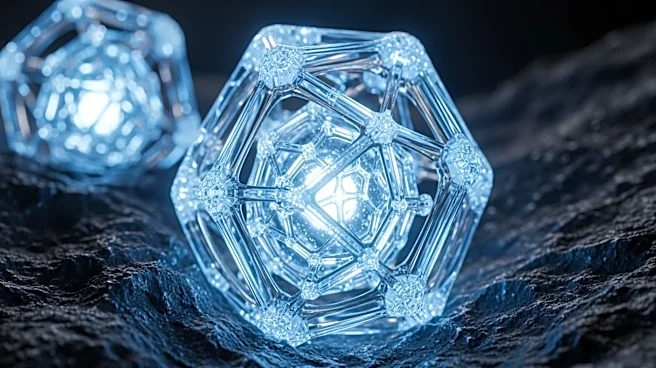
Scientists have identified a new molecule-trapping crystal formed during the Trinity nuclear test in 1945. The discovery was made in a rare form of trinitite, a glassy material created by the explosion. The crystal, a clathrate compound, was found in red
trinitite, which is enriched with metals from the test site's infrastructure. This clathrate is the first of its kind found among nuclear explosion products, consisting of a lattice that traps molecules within cage-like structures. The study provides insights into the extreme conditions of nuclear detonations and the unique materials they produce.
Why It's Important?
The discovery of the clathrate compound offers valuable information about the chemical processes and materials formed under the extreme conditions of a nuclear explosion. Understanding these materials can enhance scientific knowledge of nuclear reactions and their environmental impacts. The findings have implications for nuclear forensics, helping scientists analyze and interpret the remnants of nuclear tests. This research also contributes to the broader field of materials science, as it explores the formation of rare and complex structures that are difficult to replicate in laboratory settings.
Beyond the Headlines
The study of trinitite and its unique compounds highlights the intersection of science and history, as researchers continue to uncover new information from past nuclear events. The discovery of the clathrate compound may lead to further investigations into other unexplored materials formed during nuclear tests. This research underscores the importance of preserving and studying historical artifacts to gain insights into scientific phenomena. The findings also raise questions about the potential applications of these materials in technology and industry, as well as their long-term environmental effects.