








What's Happening?
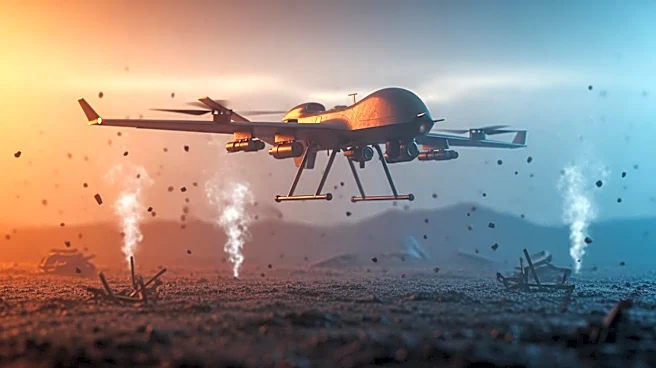
The US Army has equipped its Medium Range Reconnaissance (MRR) unmanned aerial systems (UAS) with a new 50 mm High Explosive Airburst munition, known as the Scalable Precision Explosive Airdrop Round (SPEAR). This development was demonstrated during Exercise
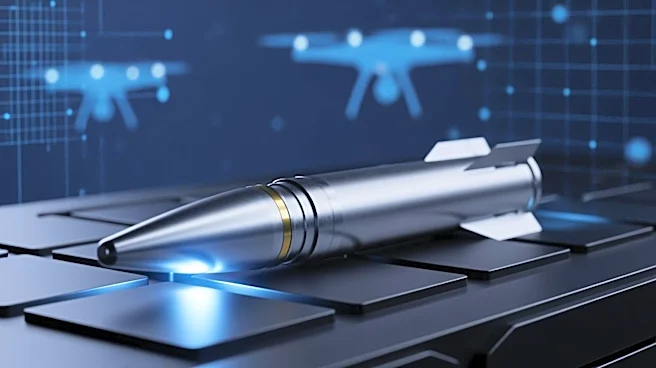
'African Lion 26', where the army's Combat Capabilities Development Command (DEVCOM) tested the munition on Anduril's Ghost-X and PDW's C-100 systems. The SPEAR munition, weighing under 5 lbs, features a programmable airburst fuze and is designed for integration with Group 1 and 2 UAS. The system allows for precise targeting and detonation, enhancing the UAS's combat capabilities.
Why It's Important?
The integration of the SPEAR munition into UAS platforms represents a significant advancement in military technology, providing the US Army with enhanced precision strike capabilities. This development allows for more effective engagement of targets with reduced collateral damage, aligning with modern warfare's emphasis on precision and efficiency. The ability to deploy such munitions from unmanned systems also reduces the risk to personnel, as operations can be conducted remotely. This advancement could influence future military strategies and procurement decisions, as the demand for precision-guided munitions and advanced UAS capabilities continues to grow.
What's Next?
The US Army plans to field the SPEAR munition by September or October 2026, marking a significant milestone in its UAS capabilities. As the army continues to refine and expand its use of unmanned systems, further developments in precision munitions and UAS technology are expected. This could lead to broader adoption of such technologies across different branches of the military and potentially influence allied nations to pursue similar advancements. The ongoing evolution of UAS capabilities will likely play a critical role in shaping future military operations and strategies.