




What's Happening?
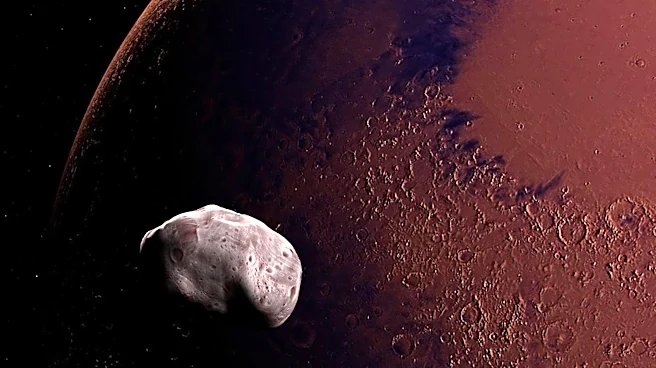
Japan's Martian Moons eXploration (MMX) mission is set to launch in Japanese fiscal year 2026, with the goal of landing on Phobos, one of Mars's moons, and returning over 10 grams of material to Earth. The spacecraft will reach Mars in 2027, spend three
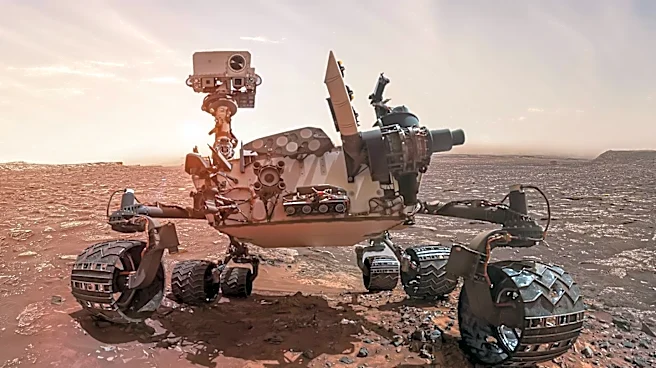
years studying Phobos and Deimos, and depart in 2030, with the sample capsule expected to land in South Australia in 2031. This will mark the first time material has been deliberately collected from the Martian system and brought back to Earth. The mission involves a complex landing on Phobos, where gravity is approximately 1,700 times weaker than Earth's, posing significant engineering challenges. Before the main sampling, a small rover named IDEFIX, developed by French and German space agencies, will be deployed to explore the surface.
Why It's Important?
The MMX mission holds immense scientific importance as it aims to provide direct evidence about the origin of Phobos and the early history of Mars. By analyzing samples on Earth, scientists can determine whether Phobos is a captured asteroid or formed from debris ejected from Mars, resolving a long-standing debate. The collected material will undergo detailed mineralogical, chemical, isotopic, and organic analyses, offering insights into the impact history of Mars and the long-term leakage of its atmosphere. This mission represents a critical step beyond remote inference, providing tangible samples that can be studied with advanced laboratory techniques not available on spacecraft. The partnership with Australia for the sample return highlights international collaboration in space exploration and leverages Australia's experience in recovering sensitive scientific payloads.
What's Next?
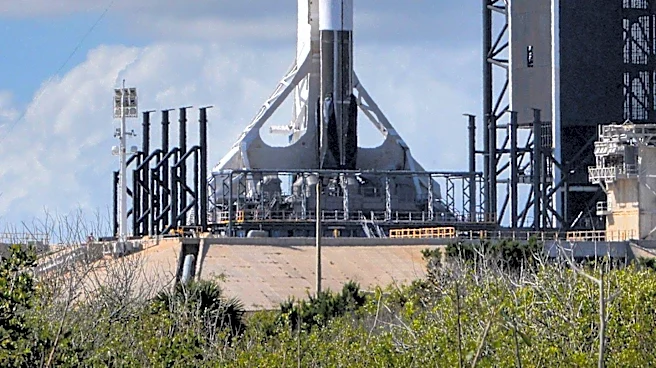
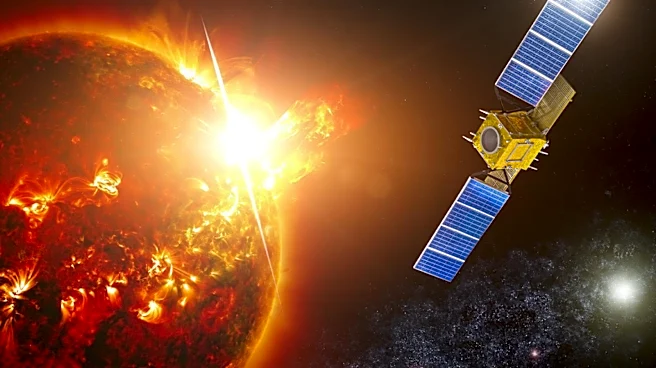
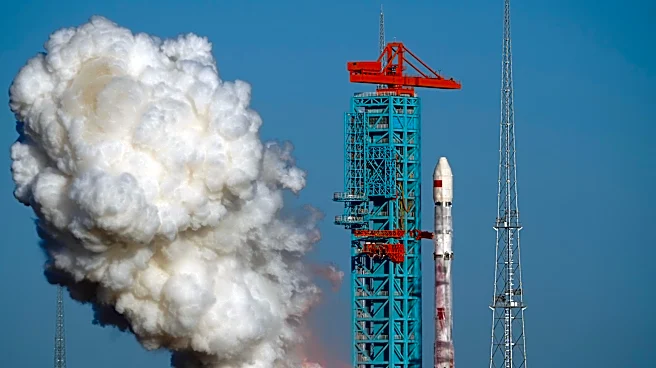
The next critical step for the MMX mission is the successful launch of the H3 rocket in Japanese fiscal year 2026. Following launch, the spacecraft will embark on an interplanetary cruise to Mars. Upon arrival, it will spend an extended period in quasi-satellite orbits around Phobos, conducting detailed reconnaissance with its 11 instruments to map the moon's surface and identify optimal landing sites. The IDEFIX rover will then be deployed to gather initial data on the surface environment and regolith properties. The main spacecraft will perform a brief, precisely timed landing to collect samples using two different systems: a coring tube and a pneumatic system. The samples will be sealed in a return capsule for its journey back to Earth, culminating in its recovery in South Australia in 2031.
Beyond the Headlines
The MMX mission pushes the boundaries of space exploration by attempting a sample return from a celestial body with extremely weak gravity. The engineering challenges involved in landing, sampling, and returning from such an environment will yield invaluable knowledge for future missions to asteroids, comets, and other low-gravity objects. The potential discovery of organic molecules in the samples, even if not biological in origin, could shed light on the chemical processes that occur in the early solar system and the conditions necessary for life. This mission also underscores the growing trend of international cooperation in complex space endeavors, pooling resources and expertise to achieve ambitious scientific goals. The meticulous handling and curation of the returned samples will be crucial, establishing a controlled chain of evidence that distinguishes them from meteorites found on Earth, thereby maximizing their scientific value for generations of researchers.