
What's Happening?
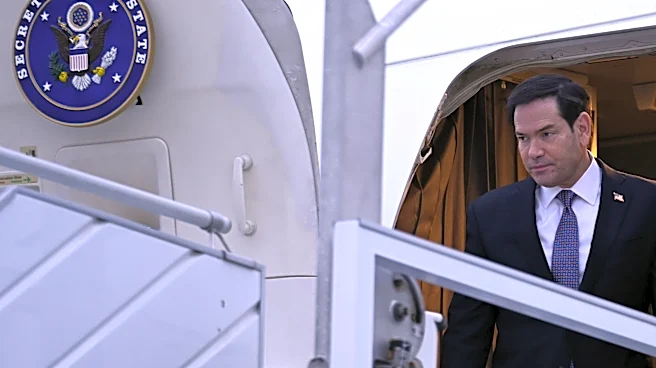
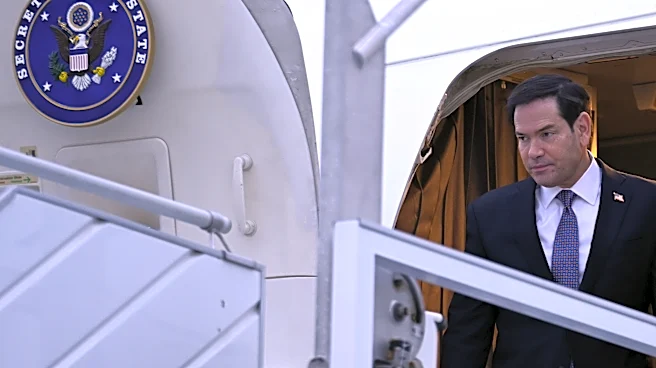
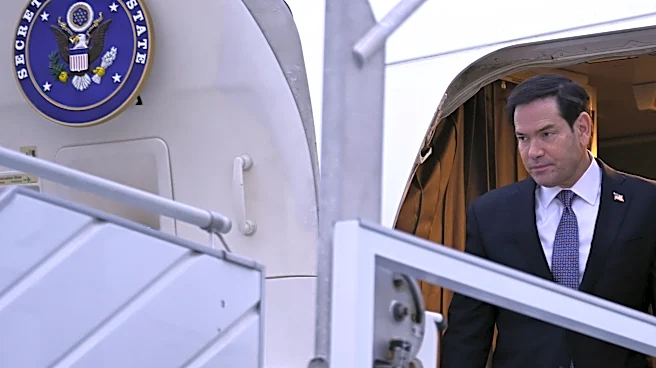
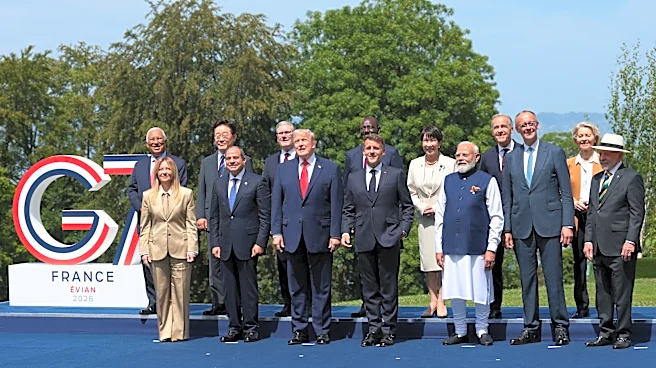
G7 Foreign Ministers convened in Paris to coordinate actions on pressing global issues, including the ongoing conflicts in Ukraine and the Middle East, and emerging humanitarian crises. A significant concern
raised was the escalating risk of famine in parts of Darfur and Kordofan in Sudan, attributed to continued fighting, restricted humanitarian access, and attacks on civilian infrastructure. The ministers also addressed the humanitarian situation in Gaza, calling for unimpeded humanitarian access and reconstruction efforts. They reiterated the need for Hamas's disarmament and Israel's progressive withdrawal from the Gaza Strip under agreed conditions. Additionally, the G7 expressed concerns about the profound economic crisis and humanitarian needs in Cuba, emphasizing the importance of improving aid delivery mechanisms. The meeting underscored the interconnectedness of global security, economic stability, and humanitarian well-being, with ministers calling for coordinated action on global food security and more efficient humanitarian logistics.
Why It's Important?
The G7's coordinated stance on these global crises highlights the severe humanitarian challenges facing several regions, with direct implications for international stability and U.S. foreign policy. The growing risk of famine in Sudan, exacerbated by conflict and climate factors, could lead to mass displacement and further regional destabilization, potentially requiring significant international intervention and aid from the U.S. The situation in Gaza, characterized by calls for humanitarian access and reconstruction, remains a critical point of tension in the Middle East, impacting U.S. diplomatic efforts and aid commitments in the region. Addressing these issues is crucial for preventing wider humanitarian catastrophes, mitigating geopolitical instability, and upholding international humanitarian law. The G7's focus on improving humanitarian logistics and global food security also reflects a recognition that these challenges require a unified, multilateral approach to be effectively managed, influencing future U.S. contributions to international aid and development.
What's Next?
Following the G7 meeting, increased diplomatic efforts are expected to push for de-escalation of conflicts and improved humanitarian access in affected regions. For Sudan, the G7's call for a ceasefire and unimpeded humanitarian access will likely lead to continued pressure on warring parties and external actors to cease support for belligerents. In Gaza, the emphasis on humanitarian access and reconstruction suggests ongoing international advocacy for the opening of additional crossings and the rehabilitation of infrastructure. The G7's support for UN80 reforms and more efficient humanitarian logistics indicates a push for systemic improvements in global aid delivery, which could influence how international organizations, including those supported by the U.S., operate. Further coordination among G7 members and other international partners is anticipated to address global food insecurity and strengthen supply chain resilience, potentially leading to new funding commitments and policy initiatives from member states, including the United States.
Beyond the Headlines
The G7's discussions reveal a deeper concern about the weaponization of humanitarian aid and the systemic challenges in delivering assistance in conflict zones. The explicit mention of restrictions on humanitarian access in Sudan and the ongoing issues in Gaza point to a broader pattern where civilian populations are disproportionately affected by conflict and political maneuvering. This raises ethical questions about state responsibility and the effectiveness of international mechanisms in protecting vulnerable populations. The call for diversified critical minerals supply chains and stronger coordination against economic coercion also signals a strategic shift towards bolstering economic security and reducing dependencies, which could reshape global trade relationships and impact U.S. economic policy. The emphasis on coordinated action against hybrid threats and the protection of critical technologies further underscores a growing awareness of complex, multi-faceted challenges that extend beyond traditional security concerns, requiring a more integrated and resilient international response.