





What's Happening?
Researchers have unearthed a new species of dinosaur, Nagatitan chaiyaphumensis, in Thailand, marking it as the largest found in Southeast Asia. This sauropod, from the late Early Cretaceous period, was about 90 feet long and weighed around 30 tons. The
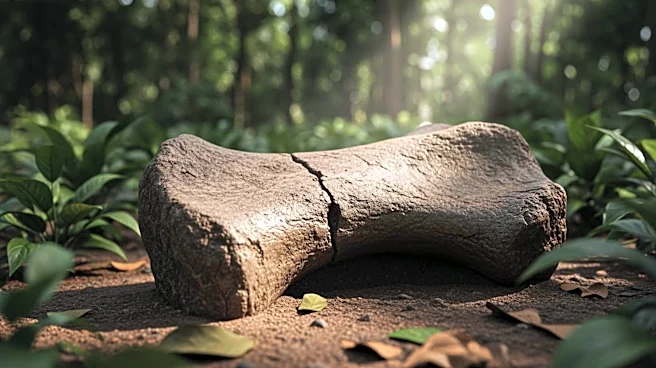
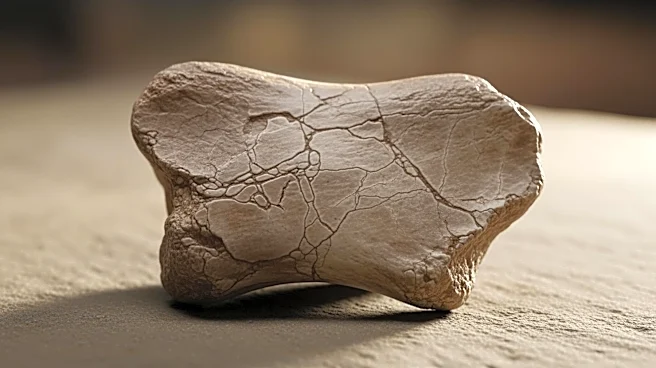
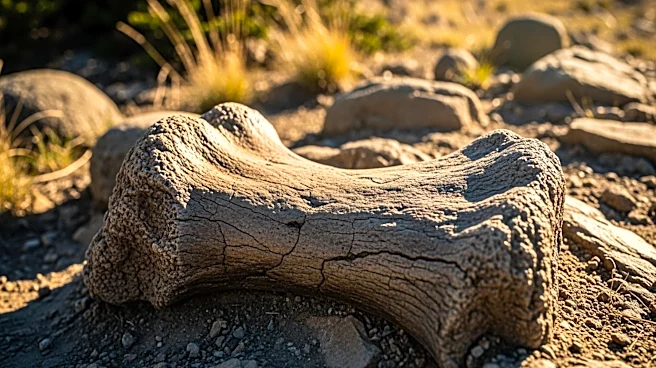
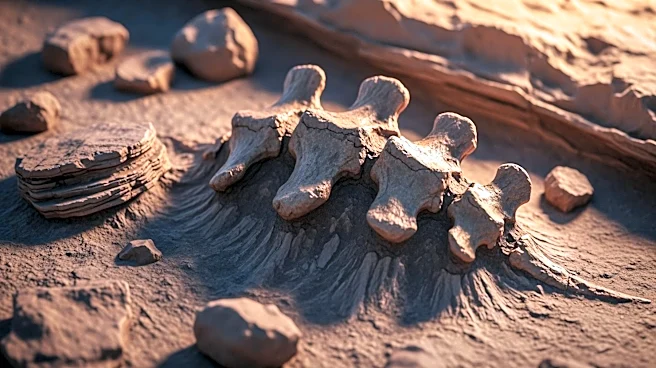
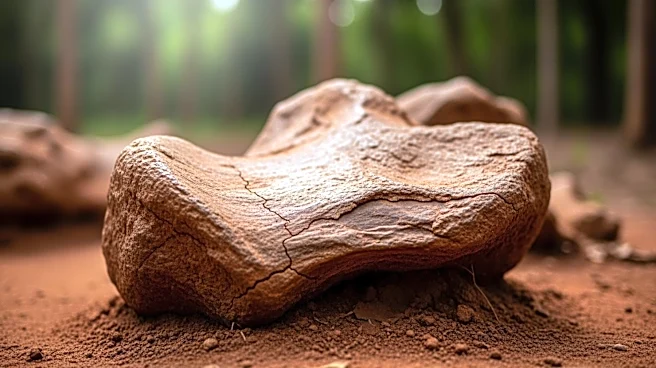
fossils, discovered in the Chaiyaphum province, include parts of the spine, rib, pelvis, and leg bones. The discovery, published in the journal Scientific Reports, provides insights into the evolutionary trends of sauropods, which were about to become even larger during the Middle Cretaceous period. The research highlights the significance of this find in understanding the evolutionary history of dinosaurs in the region.
Why It's Important?
The discovery of Nagatitan chaiyaphumensis is pivotal for understanding the evolutionary trajectory of sauropods, particularly in Southeast Asia. It offers a glimpse into the ecological and environmental factors that influenced the size and distribution of these massive herbivores. The research contributes to the broader understanding of dinosaur evolution and the climatic conditions that facilitated the development of such large species. This find enhances the knowledge of paleontologists about the diversity and adaptation of dinosaurs in different regions, providing a more comprehensive picture of prehistoric life on Earth.