
What's Happening?
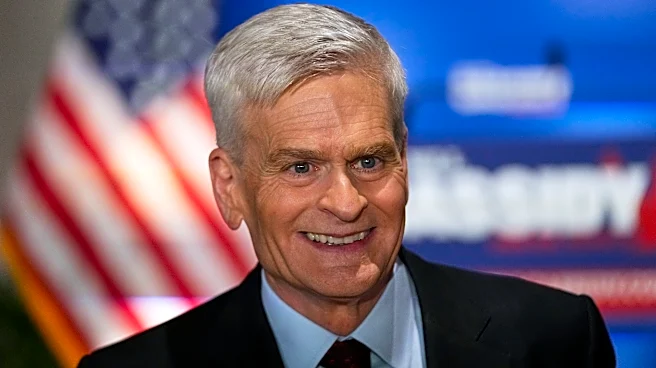
A small but growing group of Republican lawmakers, informally known as the 'YOLO caucus,' is increasingly willing to break ranks with President Trump, potentially complicating his legislative agenda. This
group includes figures like Sen. Bill Cassidy of Louisiana, who recently voted with Democrats to limit U.S. military action in Iran, and Rep. Thomas Massie of Kentucky, who has consistently opposed Trump's policies. The caucus is characterized by members who feel emboldened to act independently, often due to retirement or representing states that reward political independence. This development comes as the Republican Party holds a fragile majority in Congress, and any shift in loyalty could impact the passage of significant legislation.
Why It's Important?
The emergence of the YOLO caucus signifies a potential shift in the Republican Party's internal dynamics, challenging President Trump's influence over his party. This could have significant implications for U.S. politics, as it may hinder the administration's ability to pass key legislation, particularly on contentious issues like immigration and military action. The growing dissent within the party could also affect the upcoming midterm elections, as Democrats may capitalize on the division to push their legislative agenda. The situation underscores the delicate balance of power in Congress and the potential for increased bipartisan cooperation on certain issues.
What's Next?
The immediate test for the Republican leadership will be securing enough votes to pass a funding package for Immigration and Customs Enforcement and Customs and Border Protection. As the midterm elections approach, the shifting loyalties within the GOP could lead to more legislative challenges. Democrats, led by figures like House Minority Leader Hakeem Jeffries, are likely to exploit these divisions by using tactics such as discharge petitions to bring issues directly to the floor for a vote. The evolving political landscape may also influence future Republican strategies and candidate endorsements.