



What's Happening?
President Donald Trump has vetoed the 'Finish the Arkansas Valley Conduit Act,' a bipartisan bill aimed at providing clean water to rural southeastern Colorado. The bill, which had passed Congress with strong bipartisan support, was intended to help local
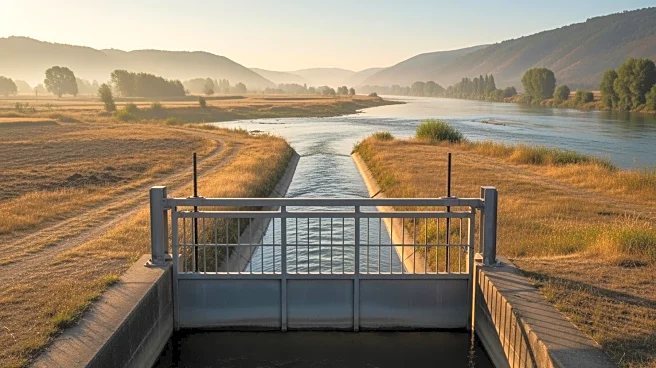
communities finance their share of the Arkansas River Valley conduit project through no-interest federal loans. The conduit, a major infrastructure project, is designed to deliver clean water to 39 communities in the region, supporting farming, factories, and households. Despite the Congressional Budget Office estimating the bill's cost to the federal government at less than half a million dollars, President Trump cited fiscal concerns in his veto message, emphasizing the need to prevent taxpayer funding of expensive policies. The project, which began construction in 2023, has been in planning since the 1960s and aims to address water quality issues by reducing groundwater withdrawals that can lead to radioactive contamination.
Why It's Important?
The veto of this bill has significant implications for southeastern Colorado, where the conduit project is seen as crucial for providing safe drinking water and supporting local economies. The project is expected to create jobs and meet federally mandated water quality standards for approximately 50,000 residents. The veto has sparked criticism from both Republican and Democratic lawmakers, with some suggesting political motives behind the decision. The bill's rejection could delay the project's completion, risking the investment of over $200 million already made by federal, state, and local entities. The veto also challenges the bipartisan support the project had garnered, highlighting potential divisions within the Republican Party and between Congress and the President.
What's Next?
Following the veto, the Southeastern Colorado Water Conservancy District and congressional supporters are exploring next steps to advance the project. There is potential for Congress to override the veto, given the bill's strong bipartisan support, but this would require Republican leaders to challenge President Trump. Lawmakers, including Rep. Lauren Boebert and Sens. Michael Bennet and John Hickenlooper, have expressed their intent to continue advocating for the project. The outcome of this legislative effort will determine the future of the conduit and its impact on the region's water security and economic development.