






What's Happening?
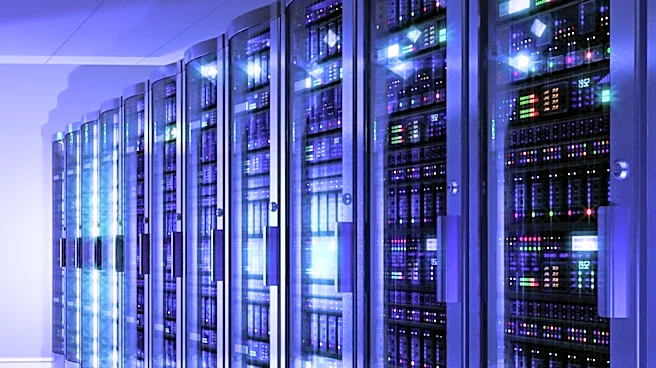
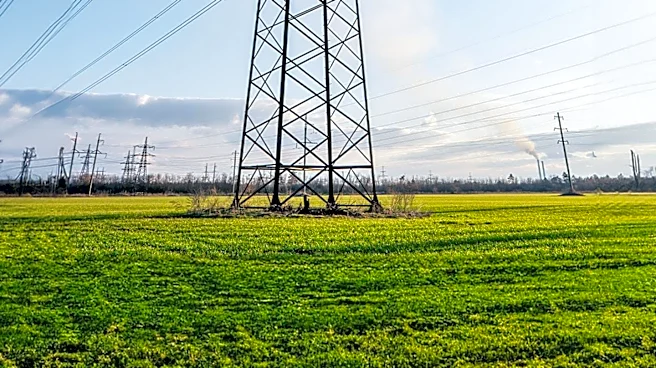
The rapid proliferation of large-scale Artificial Intelligence (AI) data centers across the United States is leading to increased electricity costs for consumers. These hyperscale facilities demand substantial power and necessitate significant upgrades
to the electrical grid, including new transmission lines and substations. The financial burden for these infrastructure improvements is being distributed among all electricity consumers, including homeowners, renters, and local businesses, regardless of their direct use of AI. Experts, such as Ari Peskoe from the Harvard Electricity Law Initiative, confirm that these costs are spread across entire regions. The accelerated pace of AI data center development is also contributing to higher costs due to increased demand for components like transformers, which are in short supply.
Why It's Important?
The rising electricity costs due to AI data centers represent a significant economic impact on U.S. households and businesses. While Congress is attempting to devise plans to protect ratepayers, the lack of a clear method to differentiate costs directly attributable to AI makes it challenging to assess the true financial burden on consumers. For instance, Maryland's Office of People's Counsel projected an annual increase of up to $216 per resident due to data center-related costs. This situation highlights a critical challenge in balancing technological advancement with consumer affordability and equitable cost distribution. The issue also underscores the need for transparent accounting of infrastructure investments and their beneficiaries, as the benefits of grid upgrades, while potentially improving reliability for all, are primarily driven by the demands of the AI industry.
What's Next?
Congress is actively working on plans to protect ratepayers from the escalating electricity costs associated with AI data centers. However, a significant challenge remains in accurately determining how to equitably divide these costs, as there is no consensus on what infrastructure is solely for data centers versus what benefits the general public. Utilities and regulatory bodies will likely face increasing pressure to develop more transparent and fair cost allocation mechanisms. The ongoing rapid buildout of AI infrastructure suggests that these cost pressures will continue, necessitating long-term strategies for grid modernization and energy supply. Future discussions will likely involve balancing the economic benefits of AI development with the need to prevent undue financial strain on everyday consumers.
Beyond the Headlines
The expansion of AI data centers and their energy demands raise broader questions about the sustainability and equity of technological progress. While AI promises significant advancements, its substantial energy footprint could exacerbate existing challenges in energy infrastructure and climate goals. This situation highlights a potential 'hidden cost' of the digital economy, where the benefits of advanced technology are widely enjoyed, but the environmental and financial burdens are disproportionately borne. It also prompts a re-evaluation of energy policy, grid resilience, and the integration of renewable energy sources to power these energy-intensive operations. The debate over who pays for AI's energy needs could become a critical component of future national infrastructure and technology policy discussions.