



What's Happening?
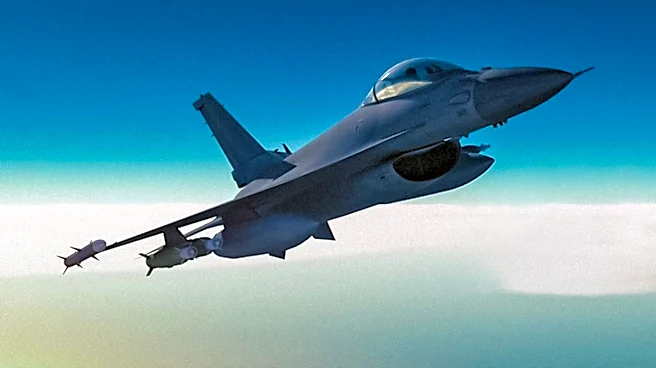
Taiwan has received three additional U.S.-built F-16V Block 70 fighter jets, bringing its total new-generation Viper fleet to five aircraft. These deliveries are part of a 2019 order for 66 F-16V Block 70 jets from the United States, a deal valued at approximately
$8 billion. The aircraft are manufactured at Lockheed Martin’s facility in Greenville, South Carolina. The F-16V Block 70 is recognized as the most advanced variant of the F-16 family, featuring an AN/APG-83 Active Electronically Scanned Array (AESA) radar, modernized cockpit displays, an upgraded mission computer, and an extended-life airframe. This latest delivery suggests that previous delays, attributed to supply-chain constraints and production-line bottlenecks, are being addressed. Taiwan's Ministry of National Defense anticipates steady deliveries in the coming months, aiming to complete most of the order by the end of 2027. The new jets will primarily be based at southern airfields and are part of a broader program that includes new runway infrastructure, maintenance facilities, and expanded pilot-training capacity.
Why It's Important?
The expansion of Taiwan’s F-16V fleet holds significant strategic weight, particularly amidst increased People's Liberation Army Air Force activity around the island. These advanced fighters enhance Taiwan's capacity for long-range threat detection, precision engagement, and coordinated air defense operations, thereby strengthening its air superiority and deterrence capabilities. The F-16V Block 70's AESA radar is crucial for detecting and prioritizing multiple targets, including small, low-flying unmanned aircraft, which is particularly relevant given the rising number of drone incursions in the Taiwan Strait. Once the full order of 66 jets is delivered, Taiwan will operate one of the largest U.S.-built F-16V fleets in the region. This modernization effort, combined with a parallel program to upgrade older F-16A/B jets to the Block 70 standard, is expected to provide Taiwan with over 200 operational F-16V/F-16A+B jets in the medium term, significantly bolstering its defensive posture.
What's Next?
Deliveries of the F-16V Block 70 jets are expected to continue at a steady pace, with Taiwan's Ministry of National Defense aiming to complete most of the order by the end of 2027. As more aircraft arrive, Taiwan's Air Force will progressively raise the fleet’s combat readiness through ongoing induction and personnel training. The establishment of a regional maintenance hub on the island, in agreement with Lockheed Martin, is also a key next step. This facility will provide upkeep services to other F-16 operators in the region, further strengthening Taiwan’s defense-industrial capacity and its position in regional supply chains. The U.S. Congress is expected to continue approving arms sales to Taiwan, which will likely be met with diplomatic protests from Beijing, framing these sales as violations of the 'One China' policy. This recurring diplomatic exchange is anticipated to accompany future major weapons programs for the island, including subsequent F-16V deliveries.
Beyond the Headlines
The continuous upgrade and expansion of Taiwan's air force with advanced U.S. fighter jets underscore a broader strategic shift towards enhancing Taiwan's self-defense capabilities and integrating it more deeply into regional defense networks. The F-16V program not only provides Taiwan with cutting-edge military hardware but also fosters greater interoperability with U.S. forces and other regional allies operating similar platforms. This technological commonality in training, maintenance, and operational practices across the Republic of China Air Force's expanding F-16V fleet is a critical long-term implication. Furthermore, the establishment of a regional maintenance hub signifies a move towards greater self-sufficiency and a more robust defense industrial base for Taiwan, potentially reducing reliance on external support for critical maintenance. This development also sends a clear signal regarding the U.S. commitment to Taiwan's security, despite ongoing diplomatic tensions with Beijing, reinforcing the complex geopolitical dynamics in the Indo-Pacific region.