





What's Happening?
The U.S. Department of Energy's Office of Critical Minerals and Energy Innovation has allocated $29.5 million to 17 national laboratory projects under its 'Mine of the Future' Initiative. This funding aims to advance innovative mining technologies across
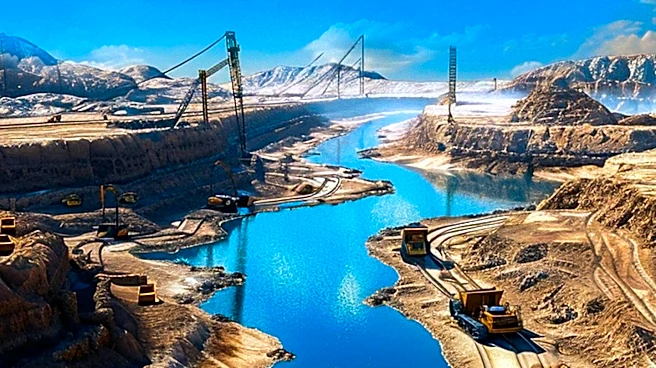
various stages, from mineral exploration to processing and recovery. Researchers at 12 U.S. national labs will focus on developing next-generation technologies, including robotic prospecting, advanced drilling methods, and techniques for recovering critical minerals without conventional mining. The initiative seeks to create more precise mining operations, improve mineral recovery rates, reduce energy consumption, and minimize waste. Assistant Secretary of Energy Audrey Robertson emphasized the goal of rapidly transitioning these technologies from laboratories to commercial-scale demonstrations to strengthen the domestic critical mineral supply chain.
Why It's Important?
This investment is critical for the United States to reduce its significant reliance on foreign sources, particularly China, for critical minerals. These minerals, including rare earth elements, lithium, and cobalt, are essential for modern technologies such as electric vehicles, batteries, electronics, aerospace, defense, and artificial intelligence. The current dependency poses substantial risks to U.S. economic and national security. By fostering innovation in domestic mining and processing, the initiative aims to secure a stable and sustainable supply chain, mitigating vulnerabilities to geopolitical disruptions. The development of advanced technologies will also address environmental concerns associated with traditional mining, promoting more efficient and less impactful extraction methods, which is vital for long-term sustainability and public acceptance of domestic mineral production.
What's Next?
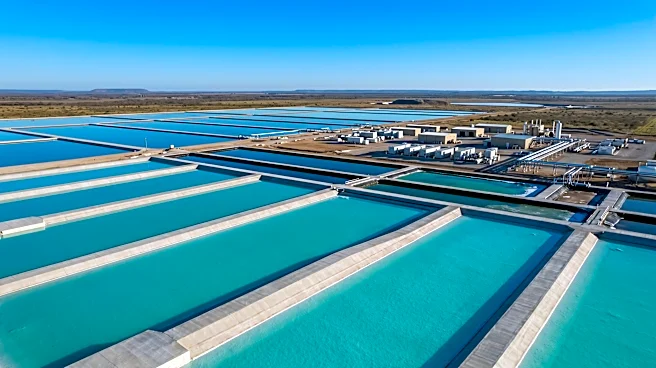
The 17 selected projects will proceed with award negotiations, focusing on developing and demonstrating their innovative technologies. These projects range from AI-powered robotic platforms for underground surveys and laser-induced breakdown spectroscopy for real-time mineral analysis to microwave energy for rock weakening and in-situ recovery methods that extract minerals without extensive excavation. The ultimate goal is to move these technologies out of the national labs and into commercial-scale operations. The success of these initiatives could lead to a transformation of the U.S. mining industry, making it more technologically advanced, environmentally responsible, and economically competitive. Continued collaboration between national labs, industry, and government will be essential to accelerate the deployment of these solutions and establish a resilient domestic critical mineral supply chain.
Beyond the Headlines
The 'Mine of the Future' Initiative represents a paradigm shift in how the U.S. approaches mineral resource management, moving towards a more integrated and technologically driven model. Beyond the immediate economic and security benefits, this initiative has profound implications for environmental stewardship and technological leadership. By focusing on recovering minerals from low-grade materials like coal ash and tailings, and developing zero-waste processes, the program addresses historical environmental liabilities while creating new resource opportunities. The integration of artificial intelligence and advanced sensing technologies across the mining lifecycle also positions the U.S. at the forefront of industrial innovation, potentially setting new global standards for efficiency and sustainability in resource extraction. This long-term vision aims to ensure that the U.S. can meet its future critical mineral needs while minimizing ecological impact.