





What's Happening?
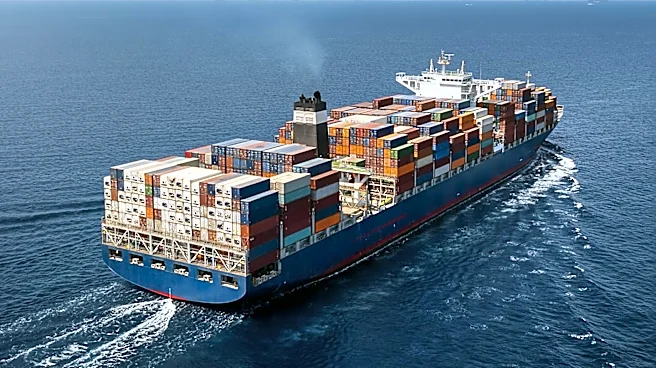
Wallenius Wilhelmsen has taken delivery of the Arctic Tern, the first of its new Shaper Class vessels, designed to operate on methanol. This dual-fuel vessel, built at China Merchants Jinlin Shipyard, is part of the company's strategy to offer net-zero
end-to-end services. The Arctic Tern is the first of six 9,300 CET car carriers ordered in 2023, with plans to expand some to a capacity of 12,100 CEU. The vessel will be operated by EUKOT Car Carriers, a joint venture between Wallenius Wilhelmsen and Hyundai Motor Group. The company is also preparing for future transitions to alternative fuels, with some vessels being built ammonia-ready.
Why It's Important?
The introduction of the Arctic Tern represents a significant step towards sustainable shipping, aligning with global efforts to reduce carbon emissions in the maritime industry. By adopting methanol as a fuel, Wallenius Wilhelmsen is positioning itself as a leader in eco-friendly shipping solutions. This move could influence other companies to adopt similar technologies, potentially accelerating the industry's transition to greener practices. The vessel's enhanced cargo capacity and fuel efficiency also promise economic benefits, meeting evolving customer demands while supporting environmental goals.
What's Next?
Wallenius Wilhelmsen plans to continue its transition to alternative fuels, with several vessels being built ammonia-ready. The company aims to achieve net-zero end-to-end services by 2027. The Arctic Tern will soon begin its operations, sailing from Asia to Europe, and is expected to complete its first methanol bunkering shortly. The success of this initiative could lead to further investments in sustainable shipping technologies and influence regulatory policies on maritime emissions.