











What's Happening?
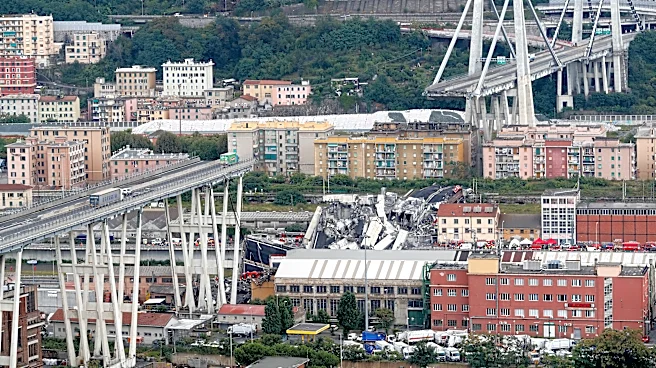
In Genoa, Italy, a court is currently deliberating the trial of 57 defendants involved in the 2018 Morandi Bridge collapse, which resulted in the deaths of 43 people. The defendants include former executives from Autostrade per l’Italia, the highway operator,
and its engineering company SPEA, as well as former officials from Italy’s Infrastructure and Transport Ministry. They face charges of negligent disaster and multiple counts of manslaughter due to alleged failures in maintaining the bridge. The collapse occurred on August 14, 2018, when a section of the bridge gave way during a rainstorm, causing vehicles to plummet to the ground. The trial, which has spanned over four years and 280 hearings, seeks to address the maintenance neglect that prosecutors argue led to the disaster. The defendants, however, deny wrongdoing, attributing the collapse to a construction defect.
Why It's Important?
The trial underscores significant concerns about infrastructure maintenance and accountability in Italy, with potential implications for public safety and policy reform. The outcome could influence how infrastructure projects are managed and maintained, not only in Italy but potentially in other countries with similar challenges. The case highlights the importance of rigorous maintenance protocols and the need for transparency and accountability in public infrastructure management. The verdict could also impact the reputations and operations of the companies involved, particularly Autostrade per l’Italia, which has already faced financial penalties and reputational damage. The trial's conclusion may set a precedent for how similar cases are handled in the future, emphasizing the need for systemic changes to prevent such tragedies.
What's Next?
As deliberations continue, the court's verdict will be pivotal in determining the accountability of the defendants and the extent of their legal responsibilities. The decision could lead to significant legal and financial repercussions for those found guilty. Additionally, the trial's outcome may prompt legislative and regulatory changes aimed at improving infrastructure safety standards and enforcement mechanisms. Stakeholders, including government agencies, infrastructure companies, and civil society groups, may push for reforms to ensure better oversight and maintenance of critical infrastructure. The case also serves as a reminder of the human cost of infrastructure failures, potentially influencing public opinion and policy priorities.