







What's Happening?
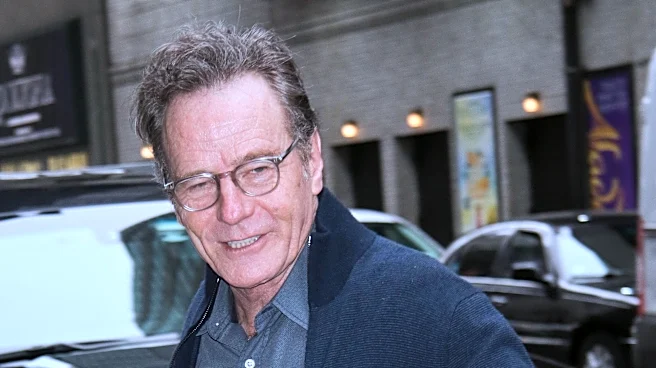
Bryan Cranston, an Emmy-winning actor known for his role in 'Breaking Bad,' has voiced concerns about the current state of the U.S. presidency. In a piece for Vanity Fair, Cranston criticized the trend of politicians using the presidency for personal
financial gain. He compared the role of the president to that of a CEO of a major corporation, suggesting that the position has become a means for individuals to secure financial rewards. Cranston, who portrayed President Lyndon B. Johnson in the play 'All the Way' and its film adaptation, reflected on how the principle of serving one's country has diminished over time. He noted that while politicians historically waited until after their tenure to capitalize on their fame, this practice is now more blatant, occurring while they are still in office. Cranston's comments come in the wake of financial disclosures revealing that President Trump earned $2.2 billion in 2025, with a significant portion from cryptocurrency ventures.
Why It's Important?
Cranston's critique highlights a growing concern about the commercialization of political offices in the U.S., particularly the presidency. This trend could undermine public trust in government institutions, as the perception of leaders prioritizing personal gain over public service becomes more prevalent. The financial success of President Trump, as disclosed, underscores the potential conflicts of interest that can arise when personal business interests intersect with public office. This situation raises questions about the ethical responsibilities of elected officials and the need for stricter regulations to prevent the exploitation of political positions for personal enrichment. The broader implications could affect voter confidence and the integrity of democratic processes.
What's Next?
The discussion initiated by Cranston may prompt further debate on the ethical standards expected of public officials. There could be calls for legislative reforms to address potential conflicts of interest and ensure transparency in financial dealings of those in office. Political leaders and advocacy groups might push for stricter disclosure requirements and limitations on business activities while holding public office. Additionally, this issue could become a focal point in upcoming elections, influencing voter priorities and candidate platforms. The response from political figures and the public will be crucial in shaping future policies regarding the intersection of business and politics.