







What's Happening?
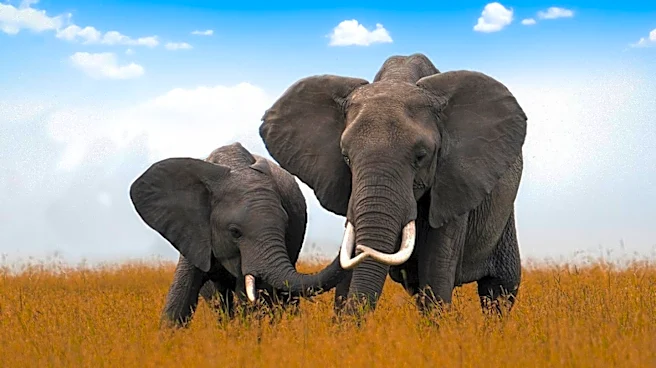
A study published in PLOS One reveals that 11 elephants rewilded in South Africa have adapted well to their natural environments after five years. These elephants, previously held in captivity, were released into protected reserves and monitored for behavioral
and physiological changes. Researchers found that their behavior closely matched that of wild elephants, with only minor differences in attentiveness and stress hormone levels. The study, led by Tenisha Roos and Tamara Eggeling, highlights the elephants' ability to regain independence and thrive in the wild, despite their history of captivity.
Why It's Important?
The findings of this study have significant implications for elephant conservation efforts. Demonstrating that captive elephants can successfully adapt to wild environments supports the viability of rewilding programs as a conservation strategy. This approach not only aids in the rehabilitation of individual elephants but also contributes to the broader goal of preserving elephant populations in their natural habitats. The research underscores the resilience and adaptability of elephants, offering hope for similar conservation initiatives across southern Africa and beyond.
What's Next?
Future research will focus on tracking larger groups of rewilded elephants across different countries to refine rewilding methods and assess long-term success. These efforts aim to enhance understanding of how captive elephants can be reintegrated into the wild, potentially influencing conservation policies and practices. Continued monitoring and study will help optimize strategies for rewilding and ensure the well-being of elephants transitioning from captivity to natural environments.