
What's Happening?
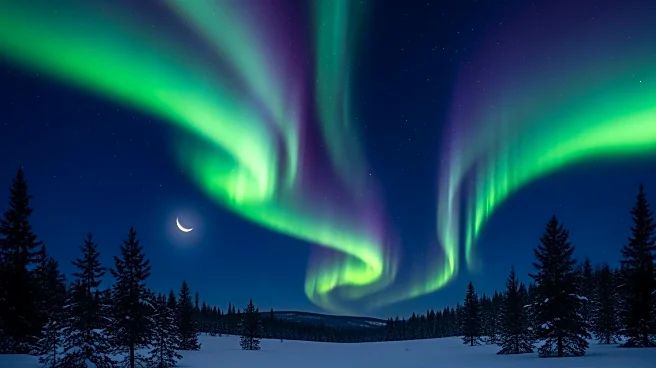
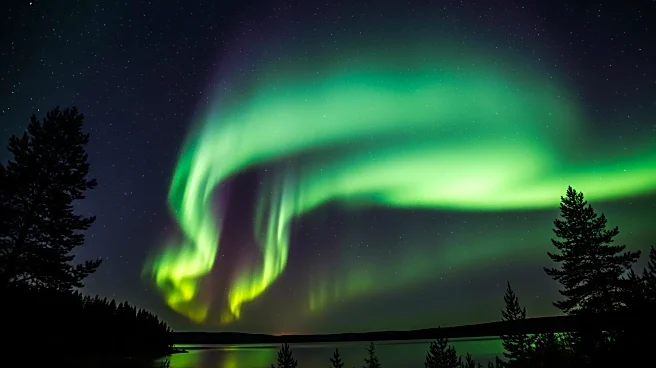
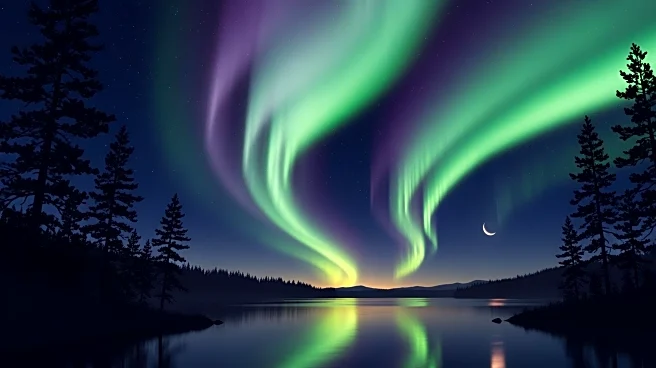
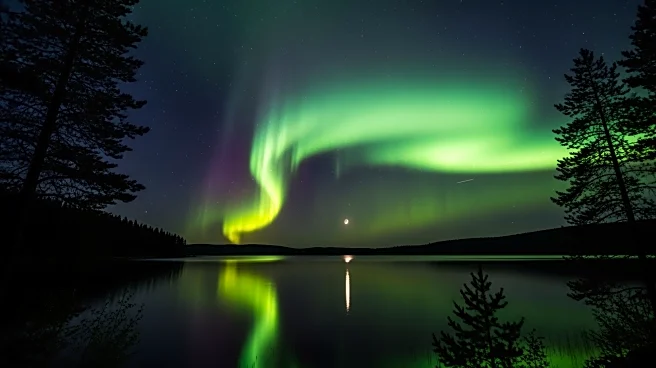
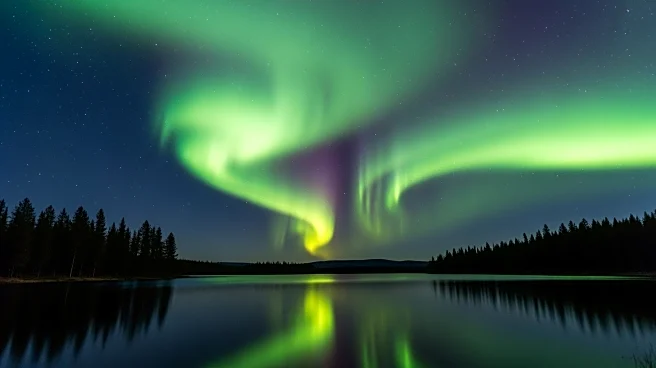
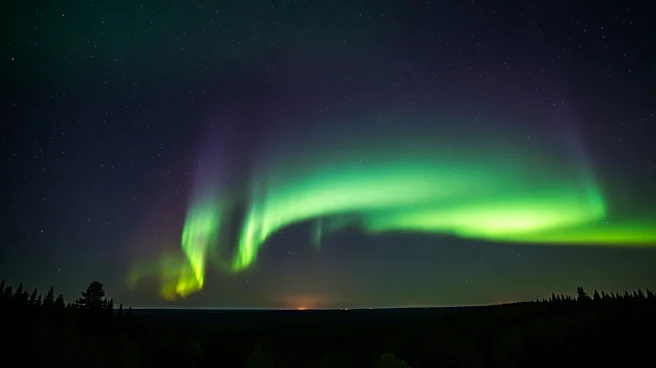
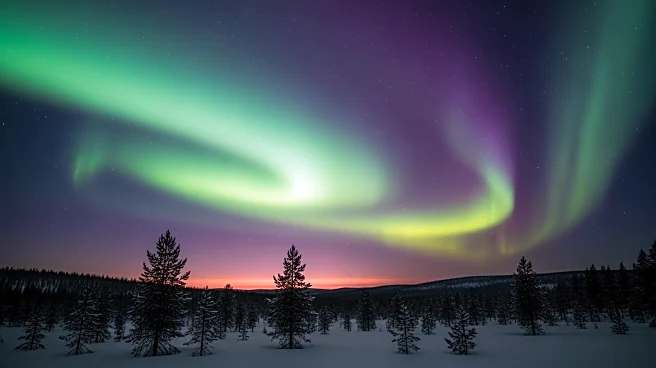
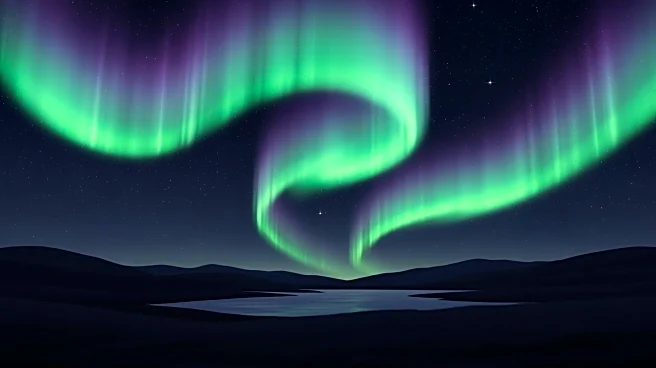
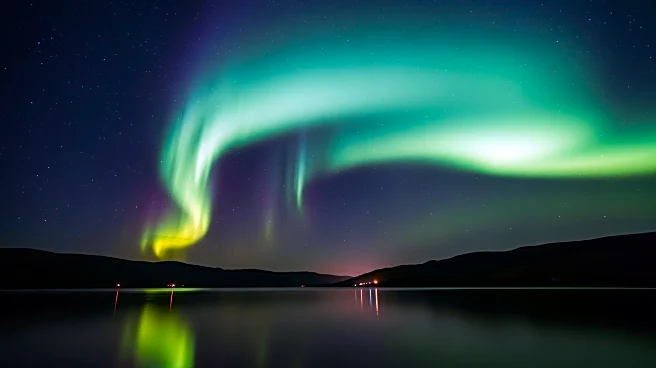
A powerful geomagnetic storm, classified as a G3 level, has caused the northern lights to be visible far beyond their usual polar regions, providing a stunning visual display across the United States and other parts of the world. This phenomenon was triggered
by a complex wave of solar energy, including multiple coronal mass ejections (CMEs) and a fast stream of solar wind from a coronal hole. The National Oceanic and Atmospheric Administration's (NOAA) Space Weather Prediction Center reported the strong storm levels over the weekend, leading to widespread aurora sightings. Photographers and aurora chasers captured breathtaking images of the auroras from locations such as Fairbanks, Alaska, Cheyenne, Wyoming, and even as far south as New Mexico. The event also extended to northern Europe and the Southern Hemisphere, with sightings reported in Iceland and Australia.
Why It's Important?
The occurrence of such a widespread aurora event highlights the impact of solar activity on Earth's atmosphere. These geomagnetic storms can affect satellite operations, GPS systems, and power grids, making it crucial for industries reliant on these technologies to monitor space weather conditions closely. The visibility of the auroras in regions not typically accustomed to such displays also underscores the potential for increased public interest in space weather phenomena. This event serves as a reminder of the interconnectedness of solar activity and terrestrial technology, emphasizing the need for continued research and preparedness in managing the effects of space weather on modern infrastructure.
What's Next?
As solar activity continues to fluctuate, further geomagnetic storms may occur, potentially leading to more aurora displays. Scientists and space weather agencies will likely continue to monitor solar activity closely to predict and mitigate the impacts of future storms. Public interest in auroras and space weather may lead to increased educational outreach and tourism opportunities, particularly in regions where such displays are rare. Additionally, industries affected by geomagnetic storms may invest in more robust systems to withstand potential disruptions.