






What's Happening?
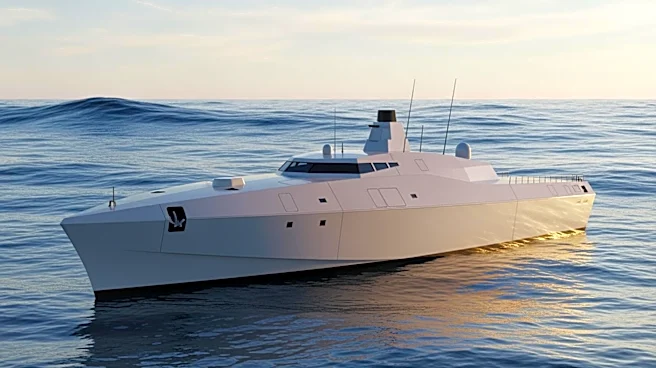
The U.S. Department of the Navy has advanced seven companies to the at-sea testing phase of its Medium Unmanned Surface Vessel (MUSV) initiative. The selected companies are Sea Machines, Leidos, Saronic Technologies, Galliano Marine Services, PacMar Technologies, Birdon,
and Huntington Ingalls Industries (HII). These companies will participate in testing scheduled to begin next month and conclude by October 2026. Successful completion of the tests will earn each company $15 million and eligibility for further production opportunities. The initiative aims to accelerate the deployment of unmanned maritime capabilities by leveraging mature commercial technologies. The Navy's approach also seeks to involve smaller and non-traditional shipyards in future fleet development, focusing on rapidly fielding unmanned systems.
Why It's Important?
This initiative is significant as it represents a strategic shift in naval operations towards increased use of unmanned systems, which can enhance naval power and operational persistence. By involving smaller and non-traditional shipyards, the Navy is fostering innovation and competition within the defense sector, potentially leading to more cost-effective and efficient solutions. The successful deployment of these systems could provide the U.S. Navy with a technological edge, creating operational challenges for adversaries and enhancing maritime security. The financial incentives and production opportunities also stimulate economic activity within the defense industry, supporting jobs and technological advancements.
What's Next?
The next steps involve the commencement of at-sea testing, which will determine the readiness and capability of the selected companies' vessels. The outcome of these tests will influence future production decisions and the broader adoption of unmanned systems within the Navy. Stakeholders, including defense contractors and policymakers, will be closely monitoring the results to assess the potential impact on naval strategy and defense procurement processes. The initiative's success could lead to further investments in unmanned technologies and influence future naval acquisition strategies.