





What's Happening?
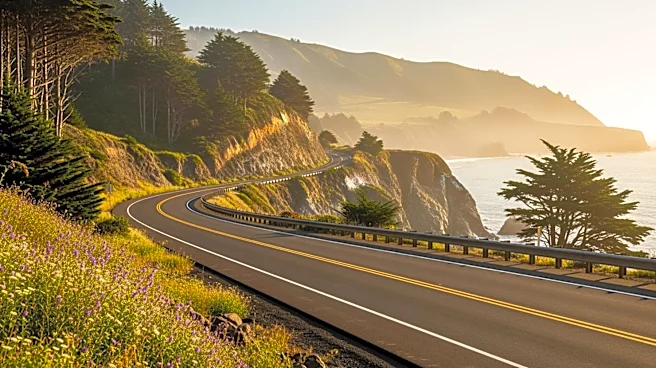
Highway 1 in Big Sur, California, has reopened after three years of repair due to landslides, leading to a significant increase in tourism. The highway, which stretches 100 miles between Cambria and Carmel, is a popular route for road trips. Since its
reopening in January, local businesses have experienced a surge in visitors. For instance, the Nepenthe restaurant has seen a 45% increase in guest volume. The California Department of Transportation (Caltrans) reports a 40% rise in restaurant and retailer guest counts and a 900% increase in northbound traffic at Ragged Point. Despite the rise in gas prices, which have increased by 26% from the previous year, many travelers are opting to visit Big Sur, finding it more affordable than flying.
Why It's Important?
The reopening of Highway 1 is significant for the local economy, as it boosts tourism and business for local establishments. The increased visitor numbers provide a much-needed economic boost after years of limited access due to road closures. However, the surge in tourism also presents challenges, such as increased traffic and the need for businesses to recruit and retain staff. The rise in gas prices could deter some travelers, but the allure of Big Sur's scenic beauty continues to draw visitors. The situation highlights the delicate balance between economic benefits and logistical challenges in managing a popular tourist destination.
What's Next?
Local authorities and businesses are preparing for a busy summer season. The Monterey County Board of Supervisors is considering a 12-month ban on parking around Bixby Bridge to manage traffic and safety concerns. Businesses are focusing on staffing and operational adjustments to accommodate the influx of visitors. The ongoing challenge will be to maintain infrastructure and manage environmental impacts while capitalizing on the economic opportunities presented by increased tourism.