


What's Happening?
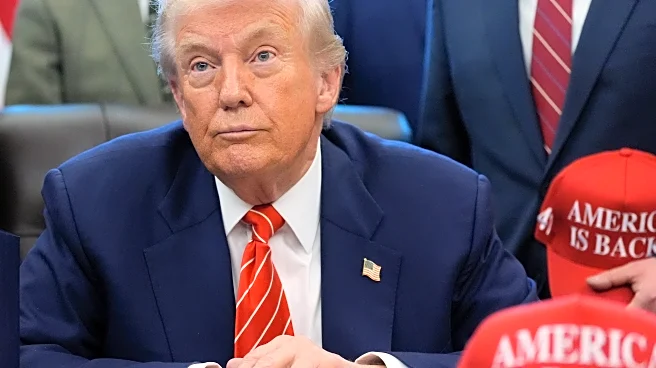
President Donald Trump has introduced a new National Security Strategy, dubbed the 'Donroe Doctrine,' which aims to assert U.S. dominance in the Western Hemisphere. This strategy is reminiscent of the historical Monroe Doctrine and has been highlighted
by recent U.S. military actions in Venezuela. The doctrine emphasizes preventing 'hostile foreign incursion' and maintaining control over strategic assets in the region. Concurrently, China has been expanding its influence in Latin America through a comprehensive strategy outlined in its third Policy Paper on Latin America and the Caribbean. This strategy includes political, economic, and technological cooperation, aiming to establish long-term influence and reduce reliance on U.S. financial systems. China's approach is characterized by infrastructure projects, financial cooperation, and strategic resource access, positioning itself as a global power with significant interests in the region.
Why It's Important?
The introduction of the 'Donroe Doctrine' and China's strategic maneuvers in Latin America highlight a growing geopolitical tension between the U.S. and China. This development could significantly impact U.S. foreign policy and economic interests in the region. The U.S. aims to maintain its influence and prevent China from gaining control over strategic locations and resources. However, China's deep-rooted economic ties and infrastructure investments in Latin America present a formidable challenge. The outcome of this geopolitical struggle could affect global trade routes, access to critical resources, and the balance of power in the Western Hemisphere. U.S. businesses and policymakers may need to adapt to a more competitive environment as China continues to expand its presence.
What's Next?
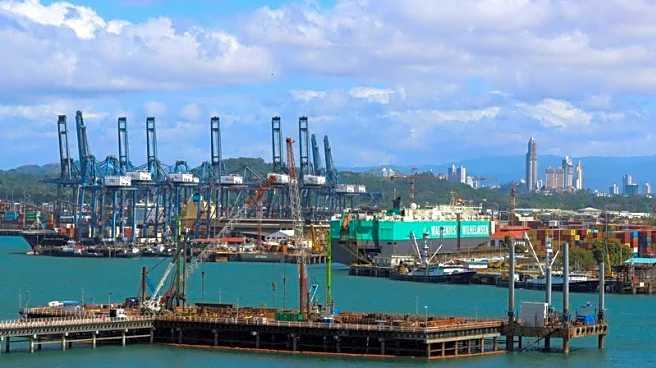
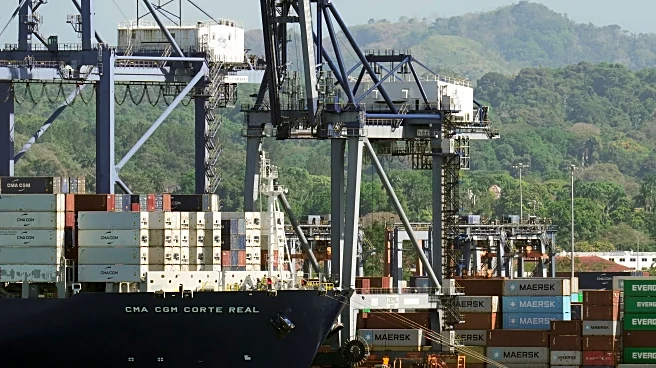
The U.S. may need to enhance its economic and security assurances to Latin American countries to counter China's influence. This could involve increased investment, financial support, and diplomatic engagement. Additionally, the U.S. might seek to strengthen alliances with regional partners to reinforce its strategic position. On the other hand, China is likely to continue its efforts to solidify its presence through infrastructure projects and economic partnerships. The situation could lead to increased diplomatic negotiations and potential conflicts over strategic assets, such as the Panama Canal, which both nations view as critical to their interests.
Beyond the Headlines
The evolving dynamics between the U.S. and China in Latin America could have broader implications for global geopolitics. The competition for influence may lead to shifts in alliances and economic dependencies, affecting international trade and security. The strategic importance of Latin America as a gateway to global markets and resources underscores the significance of this geopolitical contest. Additionally, the situation raises questions about the future of U.S. foreign policy and its ability to adapt to a multipolar world where emerging powers like China play a more prominent role.