





What's Happening?
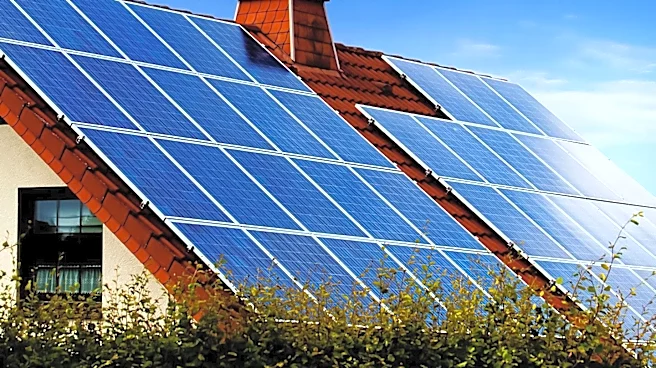
Bangladesh's parliamentary standing committee on the Ministry of Power, Energy and Mineral Resources is scrutinizing the government's rooftop solar deployment program. The committee has requested detailed information regarding the electricity supplied
to the national grid from rooftop solar, monthly installation progress, project costs, and imports of solar panels and inverters. This inquiry comes after reports indicated that only 60 MW of rooftop solar capacity had been added to the grid in the preceding 30 days, significantly short of the government's ambitious target of 4,000 MW by February 2027. The slow pace of implementation has raised concerns about the effectiveness of financial incentives, equipment availability, and overall project execution. Bangladesh has prioritized renewable energy to reduce its reliance on imported fossil fuels and meet growing electricity demand, with a strategy that includes substantial expansion of solar generation.
Why It's Important?
The progress of Bangladesh's rooftop solar initiative is crucial for its energy security and climate goals. A successful rollout would reduce the nation's dependence on imported fossil fuels, stabilize energy costs, and contribute to global efforts to combat climate change. The current shortfall in installations, however, suggests potential systemic issues that could hinder the country's energy transition. For solar developers, equipment suppliers, and financiers, Bangladesh represents a significant emerging market. The credibility of its deployment targets and the transparency of its reporting will influence international investment and partnerships in the renewable energy sector. Failure to meet these targets could undermine confidence in Bangladesh's renewable energy policies and its commitment to sustainable development.
What's Next?
The parliamentary standing committee's request for detailed data is a critical next step. The information provided by government officials will help clarify the primary barriers to the rooftop solar program's success, whether they are related to financing, equipment procurement, installation capacity, grid connections, or reporting mechanisms. The government's subsequent progress update will serve as an important test of the program's viability and its ability to transition from policy ambition to large-scale installations. Depending on the findings, adjustments to incentives, regulatory frameworks, or infrastructure development may be necessary to accelerate deployment and meet the stated targets. Stakeholders will be closely watching for transparent monthly reporting and clear pathways for installation and grid connection.
Beyond the Headlines
The challenges faced by Bangladesh's rooftop solar program highlight broader issues in renewable energy transitions, particularly in developing nations. The distinction between direct consumption by owners and electricity exported to the grid is significant; systems primarily serving owners might reduce grid purchases without appearing in export statistics, potentially masking some progress. Conversely, weak installation and interconnection rates point to fundamental implementation problems. This situation underscores the complexity of integrating distributed generation into national grids and the need for robust infrastructure, clear policy signals, and effective coordination among various stakeholders. The outcome in Bangladesh could offer valuable lessons for other countries pursuing similar renewable energy goals, emphasizing the importance of comprehensive planning and adaptive policy-making.