


What's Happening?
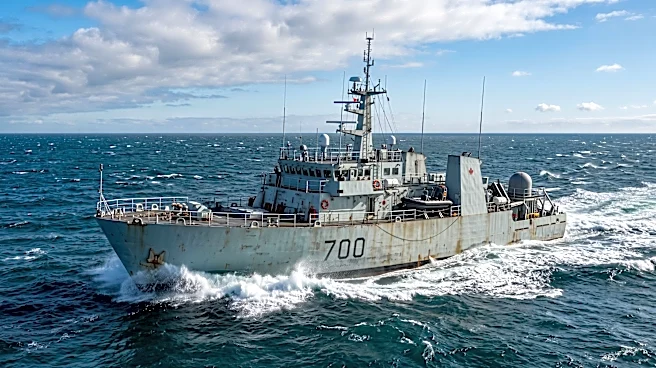
His Majesty's Canadian Ships (HMCS) Moncton and Edmonton have returned to Halifax after completing a deployment to European waters as part of the Standing North Atlantic Treaty Organization (NATO) Mine Countermeasures Group One (SNMCMG1) under Operation
REASSURANCE. From July to November 2026, these two ships contributed to NATO's maritime security and mine countermeasures efforts. Their crews, supported by embarked clearance divers and autonomous underwater vehicle operators, conducted various mine countermeasures operations throughout the deployment. HMCS Moncton also hosted a Royal Danish Navy mine countermeasures team for over two months, fostering multinational cooperation. This deployment marks the fifth time Canada has contributed Kingston-class Maritime Coastal Defence Vessels (MCDVs) to NATO's Standing Mine Countermeasures Groups through Operation REASSURANCE, reinforcing Canada's commitment to collective defense and maritime safety in the region.
Why It's Important?
This deployment underscores the ongoing commitment of NATO member states, including Canada, to maintaining maritime security and stability in European waters. Mine countermeasures operations are crucial for ensuring safe navigation and protecting vital sea lanes, which are essential for international trade and military movements. The participation of Canadian ships alongside Allied personnel strengthens interoperability and collective defense capabilities within NATO. For the U.S., a key NATO ally, such deployments by other member nations contribute to the overall burden-sharing within the alliance, allowing for a more distributed and robust defense posture. The collaboration also enhances the readiness of NATO forces to respond to potential threats, thereby safeguarding the interests of all member states, including the U.S., in a complex geopolitical environment.
What's Next?
The return of HMCS Moncton and Edmonton concludes their specific deployment, but Canada's ongoing commitment to NATO's Operation REASSURANCE is expected to continue with future rotations of its Kingston-class MCDVs. NATO will likely continue its regular exercises and deployments to maintain readiness and address evolving maritime security challenges. The experience gained by the Canadian sailors and specialist teams will contribute to enhanced expertise within the Royal Canadian Navy and the broader NATO alliance. Future operations will likely focus on adapting to new technologies in mine warfare and further integrating multinational forces to ensure a cohesive and effective response to any maritime threats in the region.
Beyond the Headlines
The continuous deployment of mine countermeasures groups highlights the persistent, though often unseen, threat of naval mines in international waters. These devices can disrupt shipping, pose risks to civilian vessels, and impede military operations. The collaborative efforts within NATO to counter these threats reflect a broader strategy of collective security, where member nations pool resources and expertise to address common challenges. This ongoing commitment also serves as a deterrent, signaling NATO's resolve to protect its maritime interests and maintain freedom of navigation. The integration of autonomous underwater vehicles in these operations points to the increasing role of advanced technology in modern naval warfare and the alliance's efforts to stay ahead of potential adversaries.