

What's Happening?
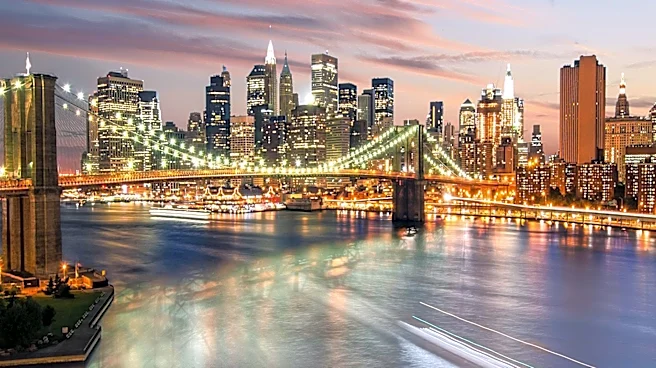
The much-anticipated self-filtering floating pool in New York City's East River, known as +POOL, has been delayed until at least 2027. Initially planned for a pilot launch this summer, the project has faced setbacks due to ongoing work on the Brooklyn
Bridge-Montgomery Coastal Resilience project. This infrastructure initiative aims to install flood-prevention measures to protect the Two Bridges area from potential storm surges. The +POOL project, which began over 15 years ago, reached a significant milestone in 2024 when Pier 35 was selected as its official location. Despite the pool's construction nearing completion, the need for a new sewer line, part of the resilience project, has postponed the pool's deployment. The nonprofit behind +POOL has secured all necessary approvals for the testing phase, but the pool remains at the Erie Basin Bargeport in Red Hook until the sewer line is completed.
Why It's Important?
The delay of the +POOL project highlights the complexities involved in urban infrastructure development, particularly in a city as densely populated as New York. The project is significant as it represents a novel approach to urban recreation and environmental sustainability, offering a public space that also cleans river water. The delay underscores the challenges of coordinating large-scale public projects with existing infrastructure improvements. For New Yorkers, the pool promises enhanced recreational opportunities and improved public access to the waterfront, aligning with broader urban development goals. However, the postponement may affect public perception and support for similar future initiatives, emphasizing the need for careful planning and communication in public projects.
What's Next?
The next steps for the +POOL project involve waiting for the completion of the new sewer line, which is essential for the pool's operation. Once the infrastructure is in place, the pool will undergo a testing phase to ensure its filtration system meets safety standards. Stakeholders, including city officials and the nonprofit organization, will need to maintain public interest and support during this period. The project's success could pave the way for similar initiatives in other urban areas, promoting sustainable recreational spaces. Additionally, the completion of the Brooklyn Bridge-Montgomery Coastal Resilience project will provide further protection against climate-related events, benefiting the city's long-term infrastructure resilience.