


What's Happening?
A bipartisan group of senators met with White House border czar Tom Homan to discuss the ongoing shutdown of the Department of Homeland Security (DHS), which has persisted for over a month. The shutdown began after funding lapsed on February 14, due to disagreements
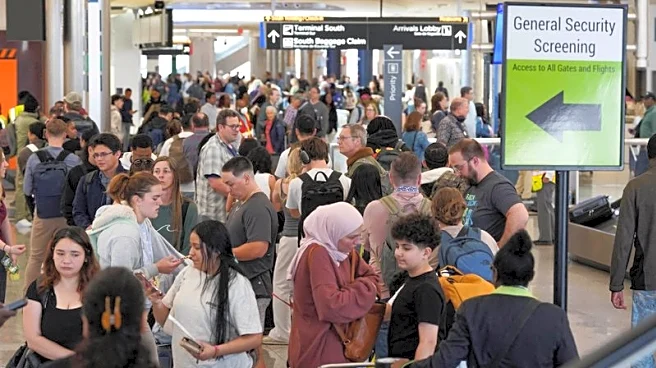
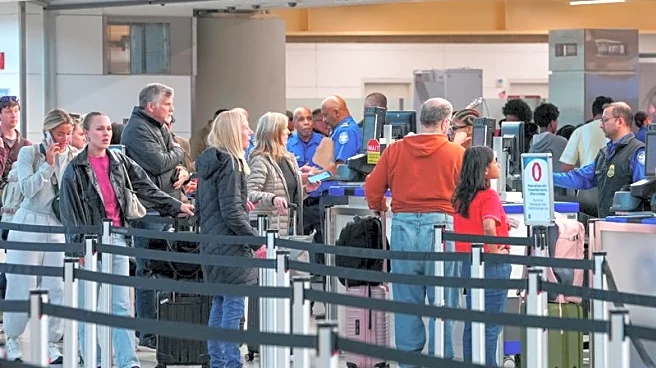
over funding for Immigration and Customs Enforcement (ICE) and Customs and Border Protection (CBP). The meeting is seen as a small step towards resolving the impasse, with both sides still far apart on key issues. The shutdown has led to significant strain at airports, with Transportation Security Administration (TSA) agents working without pay, resulting in increased sick calls and long lines. Transportation Secretary Sean Duffy warned that the situation could worsen if the shutdown continues.
Why It's Important?
The DHS shutdown has significant implications for national security and public safety, affecting over 120,000 essential workers who are currently unpaid. The situation highlights the broader challenges of political gridlock and its impact on federal operations. The strain on TSA and other DHS components could lead to disruptions in critical services, affecting travel and security. The shutdown also underscores the contentious nature of immigration policy debates, with Democrats demanding changes to ICE and CBP operations as a condition for funding. The outcome of these negotiations could set precedents for future budgetary and policy decisions related to immigration enforcement.
What's Next?
Further negotiations are expected, with the White House preparing a counteroffer. Lawmakers face pressure to resolve the shutdown before Congress's scheduled recess in April. If no agreement is reached, the shutdown could continue, exacerbating operational challenges and public inconvenience. The situation may prompt renewed calls for comprehensive immigration reform and changes to DHS funding mechanisms. Stakeholders, including airport authorities and federal employees, are likely to advocate for a swift resolution to mitigate the shutdown's impact.