





What's Happening?
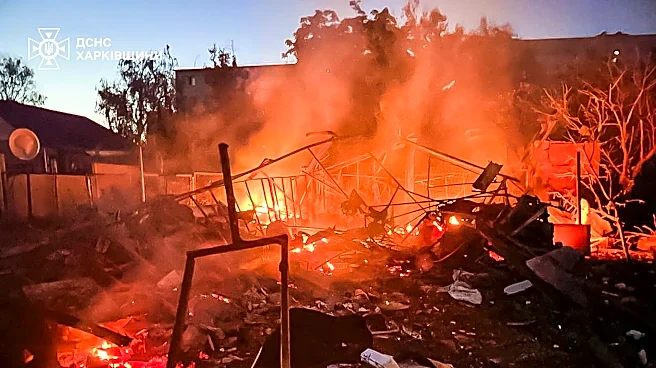
A new study by the Peace Research Institute Oslo (PRIO) reveals that 2025 saw the highest number of state conflicts since World War II, with 65 conflicts involving at least one state. The year was also the third-deadliest since the Cold War, with 245,000
battle-related deaths, largely due to Russia's war in Ukraine and violence in Sudan and Gaza. The report highlights the growing complexity of conflicts, with multiple actors involved and countries like Israel engaged in several simultaneous conflicts. The study notes a significant increase in civilian-targeted attacks, with 76,500 deaths attributed to such violence.
Why It's Important?
The findings of the PRIO report underscore the escalating global instability and the increasing complexity of modern conflicts. This has significant implications for international security and humanitarian efforts, as more countries are drawn into multifaceted conflicts. The rise in civilian-targeted violence highlights the urgent need for international intervention and peacekeeping efforts. The report also suggests that the global community must adapt its conflict resolution strategies to address the intricate dynamics of modern warfare, which could impact U.S. foreign policy and international relations.
What's Next?
The international community may need to reassess its approach to conflict resolution and peacekeeping, potentially leading to new diplomatic initiatives and alliances. The U.S. and other nations might increase their involvement in international peace efforts, focusing on conflict prevention and humanitarian aid. The report could also influence future policy decisions regarding military engagement and foreign aid, as countries seek to address the root causes of these conflicts and mitigate their impact on global stability.