





What's Happening?
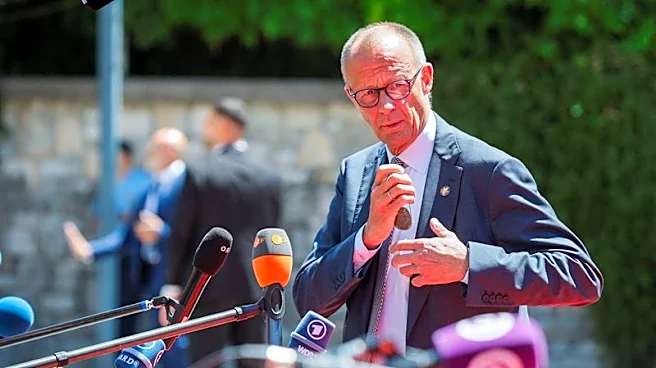
European Union leaders have emphasized the need to accelerate the bloc's enlargement process during a summit with Western Balkan countries. The meeting, held in Tivat, Montenegro, included discussions on the EU's capability and willingness to incorporate
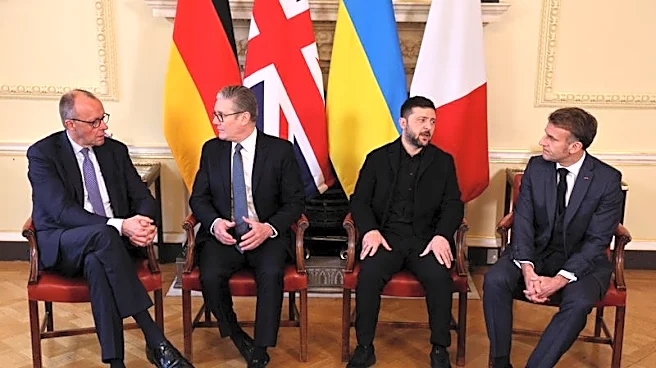
new members. German Chancellor Friedrich Merz and European Commission President Ursula von der Leyen highlighted the importance of making the enlargement process faster and more credible. The summit comes amid heightened geopolitical tensions following Russia's invasion of Ukraine, which has prompted Ukraine and Moldova to seek EU membership. The EU aims to reduce the influence of foreign powers by expanding its membership. However, the accession process remains complex, requiring extensive negotiations and legal changes, as well as unanimous approval from all 27 EU member states.
Why It's Important?
The EU's enlargement strategy is crucial for geopolitical stability in Europe, particularly in light of Russia's aggressive actions in Ukraine. By potentially integrating countries like Ukraine and Moldova, the EU seeks to strengthen its influence and reduce external threats. This expansion could also enhance economic and political stability in the Western Balkans, a region historically marked by conflict and political instability. However, the lengthy and complex accession process poses challenges, as it requires significant reforms and consensus among existing EU members. The EU's ability to successfully integrate new members could set a precedent for future enlargement efforts and impact the bloc's global standing.
What's Next?
The EU is expected to continue discussions on how to streamline the enlargement process and address the challenges faced by candidate countries. Proposals such as 'gradual integration' and 'associate membership' are being considered to facilitate the accession of countries like Ukraine. These measures could allow candidate countries to participate in certain EU activities before full membership is granted. The EU will also need to address internal concerns, such as the potential loss of veto rights for new members, to prevent future blockages in decision-making processes. The outcome of these discussions will shape the EU's enlargement policy and its geopolitical strategy in the coming years.