





What's Happening?
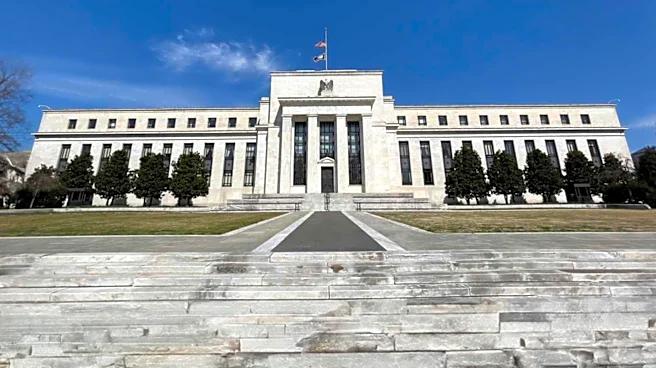
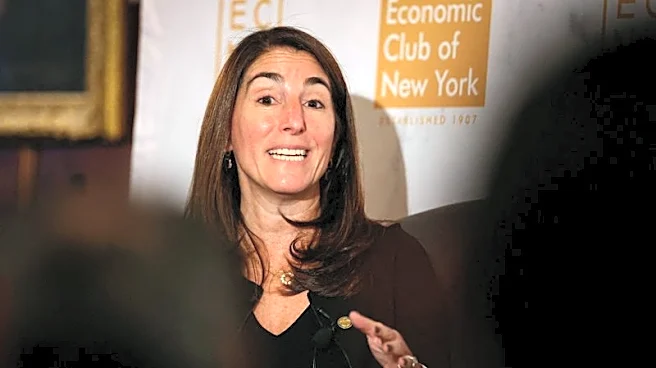
Federal Reserve Bank of Cleveland President Beth Hammack has publicly stated that benchmark interest rates must be raised to a restrictive level to combat persistent inflation. Speaking at the SNB and Its Watchers Conference in Zurich, Hammack emphasized
the need for frequent, measured policy adjustments to prevent the central bank from falling behind in its efforts to control prices. Her remarks follow her dissent at a recent Federal Open Market Committee meeting, where policymakers chose to pause borrowing costs despite ongoing price pressures. Hammack highlighted that both headline and core Personal Consumption Expenditures (PCE) inflation in September stood at 3.6% and 3.1% respectively, remaining significantly above the Federal Reserve's 2% target. She stressed that tighter monetary policy is crucial to maintain anchored inflationary expectations, especially after six years of elevated readings. Hammack also discussed the broader global financial landscape, asserting that maintaining price stability and central bank independence is vital for preserving the U.S. dollar's role as the leading reserve asset.
Why It's Important?
This stance from a Federal Reserve official signals a potential shift towards more aggressive monetary tightening, which has significant implications for the U.S. economy. Higher interest rates can impact various sectors, including housing, consumer lending, and business investment, by making borrowing more expensive. For consumers, this could mean higher costs for mortgages, car loans, and credit card debt, potentially dampening spending. Businesses might face increased financing costs, which could slow expansion and hiring. The Federal Reserve's commitment to a 2% inflation target, as reiterated by Hammack, underscores its determination to bring price stability, even if it means risking slower economic growth. The emphasis on the dollar's role as a reserve asset also highlights the broader international economic implications, as a strong and stable dollar is crucial for global trade and financial markets. Persistent inflation erodes purchasing power and creates economic uncertainty, making the Fed's actions critical for long-term economic health.
What's Next?
Markets are now anticipating further actions from the Federal Reserve, with investors increasingly pricing in potential rate increases in December and early 2027. Hammack's comments suggest that steady, incremental rate hikes are considered the least disruptive method to tighten financial conditions without causing significant economic instability. This implies that the Fed may continue with a series of smaller rate increases rather than large, sudden adjustments. The upcoming Federal Open Market Committee meetings will be closely watched for any indications of policy changes. Businesses and consumers should prepare for a continued environment of higher borrowing costs. The effectiveness of these measures in bringing inflation down to the 2% target will determine the future trajectory of monetary policy and its impact on economic growth and stability.
Beyond the Headlines
The discussion around the U.S. dollar's international role and digital assets adds another layer of complexity to the Fed's policy considerations. Hammack noted that payment stablecoins, predominantly dollar-pegged and backed by short-term government debt, are reinforcing the dollar's global reach. This could lead to increased demand for Treasury bills and potentially exert downward pressure on yields. However, she expressed caution regarding the domestic regulatory environment, questioning whether recent legislation, such as the GENIUS Act, will significantly boost worldwide dollar demand. The Act, set for implementation in January, introduces redemption standards that might create a divide between compliant onshore tokens and overseas alternatives. This highlights the evolving challenges central banks face in a rapidly digitizing financial landscape, balancing innovation with regulatory oversight and maintaining currency stability.