
What's Happening?
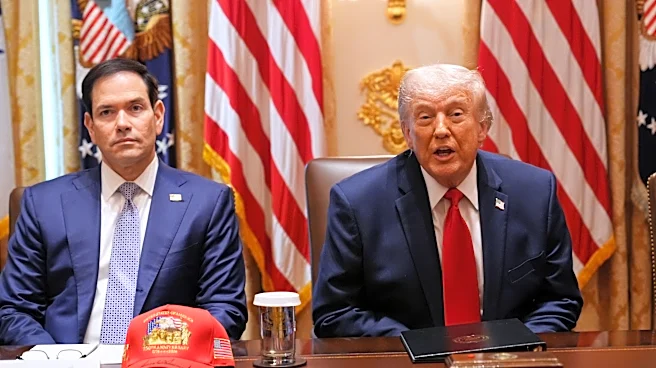
President Trump is set to announce a significant $700 million investment aimed at bolstering the coal industry in the United States. This initiative will be unveiled during an Oval Office event titled
'Beautiful, Clean Coal.' The plan involves utilizing the Defense Production Act to allocate $75 million for a new coal export terminal in Oakland, California, and $425 million to support 13 existing coal plants across ten states, including West Virginia, Kentucky, and North Carolina. Additionally, nearly $200 million in Department of Energy grants will be directed towards constructing new coal plants in Alaska and West Virginia, as well as restarting a coal plant in Maryland. This marks the first new coal plant construction in the U.S. since 2013. The initiative is expected to create thousands of jobs and save consumers $50 billion in energy costs.
Why It's Important?
This announcement underscores President Trump's continued commitment to the fossil fuel industry, particularly coal, which has been a central theme of his administration's energy policy. By invoking the Defense Production Act, the administration is prioritizing coal as a critical component of the nation's energy infrastructure. The investment is poised to have significant economic implications, potentially revitalizing regions dependent on coal mining and related industries. However, it also raises questions about the environmental impact and the future of renewable energy investments, as the administration has been scaling back on such initiatives. The decision could influence energy policy debates and impact the U.S.'s approach to climate change and energy independence.
What's Next?
The announcement is likely to spark reactions from various stakeholders, including environmental groups, industry leaders, and political figures. Environmental advocates may express concerns over the environmental and climate implications of increased coal production. Meanwhile, industry supporters and workers in coal-dependent regions may welcome the potential economic benefits. The administration's focus on coal could lead to further policy developments aimed at supporting fossil fuels, potentially affecting future legislative and regulatory actions. The broader energy market may also respond to this shift in focus, influencing investment trends and energy prices.