






What's Happening?
California has become the first state in the U.S. to implement tire efficiency standards, a move designed to save drivers approximately $1 billion per year and reduce carbon dioxide emissions. The California Energy Commission unanimously approved a new
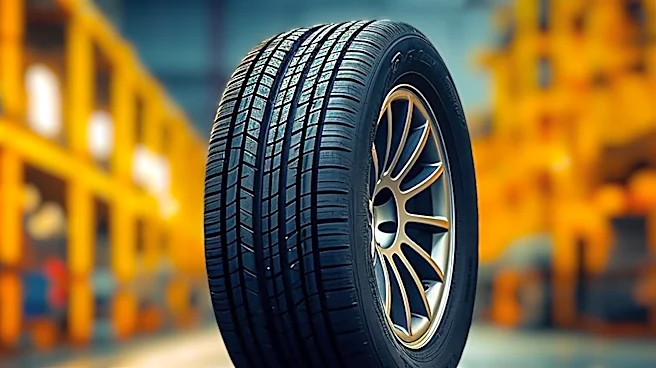
rule that will phase in standards for replacement tires, ensuring they are at least as energy-efficient, on average, as original equipment tires. The regulation also includes a 'leaf' rating labeling system to help consumers identify more efficient options. The first phase of these regulations will target the most inefficient tires starting in 2029, with a stricter standard taking effect in 2033. Exemptions are in place for snow tires and competition tires, while all-weather tires will be tracked for potential future regulation. This initiative aims to address the issue of replacement tires often being less efficient than original equipment, leading to increased fuel consumption for internal combustion vehicles and higher electricity demand for electric vehicles (EVs).
Why It's Important?
This new regulation is significant for both consumers and the environment. For drivers, it promises substantial financial savings, estimated at $1 billion annually, by reducing fuel and electricity consumption over the lifetime of their tires. The labeling system will empower consumers to make more informed purchasing decisions, potentially leading to lower long-term costs. Environmentally, the state projects a reduction of 2 million tons of carbon dioxide emissions annually, equivalent to removing about 400,000 cars from the road. This move also has broader implications for the automotive industry, as California's large market often influences national trends. While some manufacturers, like Michelin, support the goals, others, such as the Specialty Equipment Market Association (SEMA), express concerns about potential cost burdens on working-class families, despite the energy commission's calculations showing net savings for consumers. The regulation could also indirectly benefit the electric grid by reducing the energy demands of EVs.
What's Next?
The new tire efficiency standards will be implemented in two phases. The first phase, targeting the most inefficient tires, is set to begin in 2029. A second, stricter standard will follow in 2033. The California Energy Commission will continue to track all-weather tires, indicating a potential for their inclusion in future regulations. Given California's historical influence on national standards, it is anticipated that this rule could lead to similar regulations in other states. Washington and Rhode Island are already considering following California's lead. Manufacturers will need to adapt their production and labeling practices to comply with the new standards, and consumers will gradually see more efficient tire options in the market, aided by the new 'leaf' rating system. The debate over the economic impact of these changes, particularly regarding the initial cost of more efficient tires, is likely to continue as the implementation dates approach.
Beyond the Headlines
The California tire efficiency standards highlight a deeper shift towards integrating environmental and economic considerations into product design and consumer choices. This regulation underscores the principle that seemingly minor components, like tires, can have a substantial cumulative impact on energy consumption and carbon emissions. The initiative also reflects a growing trend of states taking the lead in environmental policy when federal action is perceived as insufficient or slow. The 'leaf' rating system for tires could set a precedent for similar transparency in other product categories, empowering consumers with information beyond initial purchase price. This move also touches upon the ongoing tension between regulatory bodies aiming for public and environmental benefits and industry groups concerned about compliance costs and market impacts. The long-term success of these standards could pave the way for a more sustainable and cost-effective automotive ecosystem across the U.S., demonstrating how targeted regulations can drive innovation and consumer savings simultaneously.