

What's Happening?
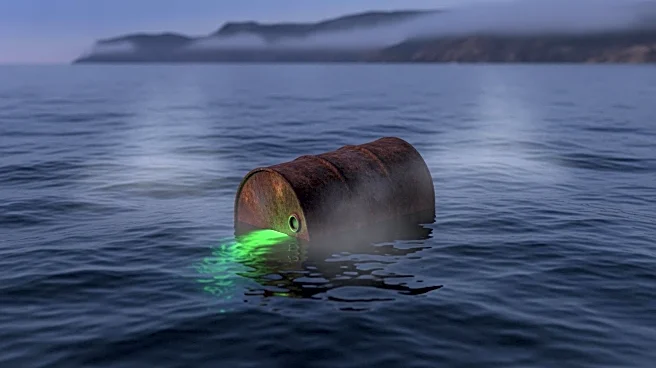
Thousands of toxic barrels dumped off the coast of California between the 1930s and early 1970s are leaking, creating white halos on the ocean floor. These halos are linked to alkaline waste that alters deep-sea chemistry and life. A study published in PNAS
Nexus reveals that the leaks have hardened sediments, reduced microbial life, and created long-lasting mineral crusts. The Scripps Institution of Oceanography mapped tens of thousands of debris targets, highlighting the scale of this underwater industrial graveyard. The findings indicate that the effects of these leaks could persist for thousands of years, impacting the seafloor ecosystem.
Why It's Important?
The leaking barrels represent a significant environmental hazard, affecting marine life and ecosystems. The alkaline waste alters the chemical composition of the seafloor, reducing biodiversity and disrupting ecological processes. This situation poses a long-term threat to marine biodiversity and could have cascading effects on the food chain, potentially impacting fisheries and local economies. The persistence of these chemical scars underscores the need for effective waste management and environmental protection policies to prevent similar occurrences in the future.
What's Next?
Efforts to address the issue are complicated by the depth and scale of the affected area. Cleanup operations would require advanced technology, such as robotic submarines, to safely manage the hazardous materials. The Environmental Protection Agency (EPA) has conducted surveys and sampling campaigns, but a complete inventory of the barrel contents remains elusive. Ongoing research and monitoring are essential to assess the full impact and develop strategies to mitigate the environmental damage. Policymakers and environmental groups may push for stricter regulations on waste disposal to prevent future incidents.