








What's Happening?
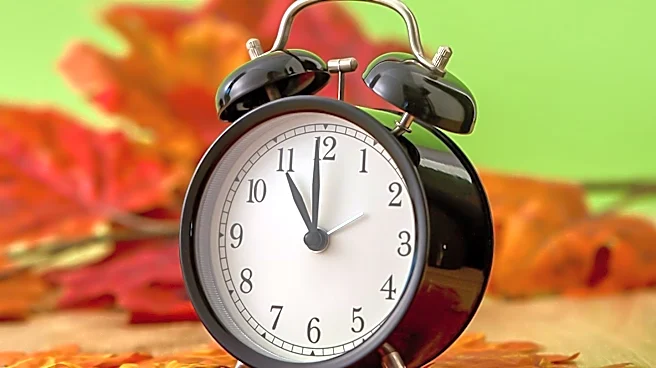
Daylight Saving Time (DST) is set to end for most U.S. states at 2 a.m. on Sunday, November 1, when clocks will 'fall back' by one hour. This change, which will see sunsets occur an hour earlier, also serves as a prompt for various home maintenance tasks.
Experts recommend using this time to change batteries in smoke and carbon monoxide alarms, replace furnace filters, and winterize outdoor hoses and sprinklers. Additionally, AARP suggests scheduling chimney checks, rotating mattresses, and inspecting for fire hazards. The Auto Club Group AAA warns that the time change could lead to visibility challenges for drivers due to earlier darkness and morning sun glare, advising caution. Health organizations, including the American Medical Association and American Academy of Sleep Medicine, advocate for year-round standard time, arguing it aligns better with the sun's natural cycle and human circadian rhythms, which are crucial for healthy sleep patterns.
Why It's Important?
The annual 'fall back' from Daylight Saving Time has significant implications for public safety, health, and household management across the U.S. The recommended home maintenance tasks are critical for preventing winter-related hazards, such as fires from faulty chimneys or carbon monoxide poisoning from unmaintained furnaces. The warnings from AAA highlight a tangible increase in road safety risks, as drivers and pedestrians adjust to altered light conditions, potentially leading to more accidents. From a public health perspective, the disruption to circadian rhythms, even by a single hour, can negatively impact sleep patterns, particularly for shift workers and those already sleep-deprived. Chronic sleep deprivation is linked to serious health issues like heart disease and cognitive decline. The ongoing debate among health groups for year-round standard time underscores a broader societal concern about the adverse effects of DST on human biology and overall well-being, suggesting a potential for policy changes that could impact daily life for millions of Americans.
What's Next?
As the U.S. transitions out of Daylight Saving Time, individuals are advised to gradually adjust their sleep schedules by moving bedtime earlier by 15-20 minutes each night leading up to Sunday to ease the body's adaptation. Maintaining a consistent wake-up time, even on weekends, and maximizing morning sunlight exposure are recommended to help anchor the circadian rhythm. Limiting bright lights at night, especially from screens, will also aid in melatonin production and promote sleep. On a broader scale, the continued advocacy from health organizations for year-round standard time may fuel legislative efforts to abolish or modify DST in more states or at the federal level. This could lead to ongoing discussions about the economic, social, and health impacts of time changes, potentially resulting in a more permanent shift in how the U.S. observes time in the future.
Beyond the Headlines
The practice of Daylight Saving Time, and its annual reversal, delves into the complex interplay between human biology, societal norms, and public policy. The concept of a 'master clock' in the brain, synchronized by light, reveals the profound impact of environmental cues on our health and daily functioning. The debate over DST extends beyond mere convenience, touching upon fundamental aspects of human well-being, productivity, and safety. The push for year-round standard time reflects a growing scientific consensus on the benefits of aligning our internal clocks with natural light cycles, potentially leading to a healthier, more rested populace. This ongoing discussion highlights how deeply ingrained practices, even those seemingly minor like adjusting clocks, can have far-reaching consequences, prompting a re-evaluation of traditions in light of modern scientific understanding and societal needs. The collective effort to adapt to these changes, from individual sleep hygiene to community-wide safety campaigns, underscores the interconnectedness of personal health and public welfare.