





What's Happening?
Italian health authorities are observing an expansion of West Nile virus (WNV) across wider areas and for longer periods each year, a phenomenon attributed to rising temperatures and extended warm seasons. More than 650 infections have been reported in Italy
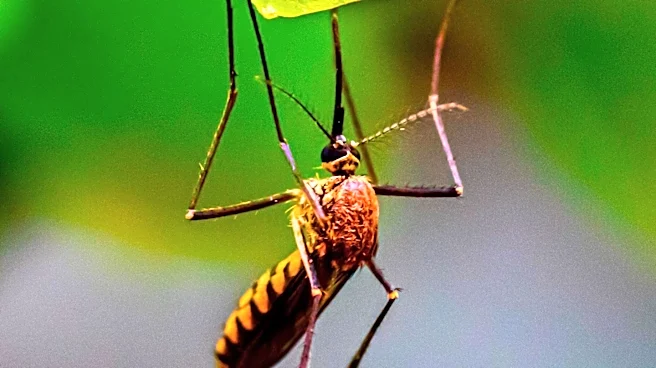
this year, accounting for approximately half of all cases in Europe. Antonino Bella, a senior researcher at Italy’s National Institute of Health (ISS), stated that higher temperatures linked to climate change facilitate mosquito reproduction and prolong the transmission season, thereby increasing the likelihood of infected mosquitoes spreading the virus to humans. WNV has been considered endemic in Italy since 2020, with cases surging annually during summer and early fall. While about 80% of infected individuals remain asymptomatic, others experience mild flu-like symptoms, and a small percentage, primarily older adults and those with underlying health conditions, develop severe neurological complications. Experts note that this year's case numbers are consistent with recent seasons, but the warmer climate allows the transmission season to extend into November and enables the virus to spread to previously unaffected regions.
Why It's Important?
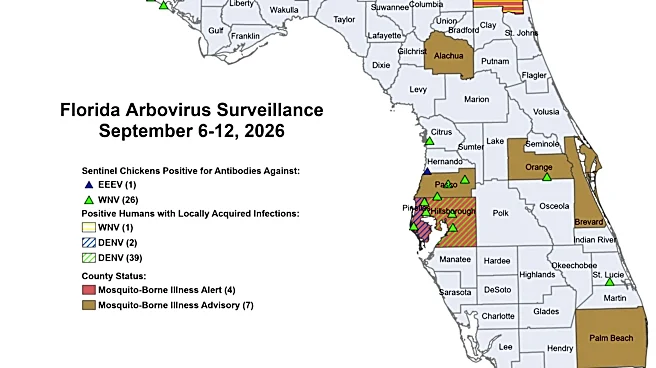
The increased spread of West Nile virus in Italy due to climate change has significant implications for public health and disease management across Europe and potentially the U.S. The expansion of the virus's geographical range and the lengthening of its transmission season highlight the direct impact of global warming on vector-borne diseases. This situation underscores the need for enhanced surveillance, prevention, and public health strategies to mitigate the risks associated with climate-driven disease proliferation. For the U.S., where West Nile virus is also present, Italy's experience serves as a cautionary tale, suggesting that similar climate trends could lead to an exacerbation of WNV cases and a broader distribution of the disease. The European Center for Disease Prevention and Control (ECDC) has already warned that warming trends, including more frequent heat waves and longer summers, create favorable conditions for invasive mosquito species like Aedes albopictus and Aedes aegypti, which can transmit various viruses, including WNV. This could strain healthcare systems and necessitate increased public health spending on mosquito control and disease monitoring.
What's Next?
The ongoing expansion of West Nile virus in Italy and other European countries suggests a need for continued and possibly intensified public health interventions. European countries, including Belgium and the Netherlands, are already studying Italy's research and surveillance systems to better prepare for and manage WNV. This collaboration indicates a growing recognition of the transnational nature of climate-driven health challenges. For the U.S., this trend could prompt a review of existing WNV surveillance and control programs, potentially leading to increased investment in mosquito abatement, public awareness campaigns, and research into climate-resilient disease prevention strategies. The ECDC's warnings about the spread of invasive mosquito species further emphasize the urgency of proactive measures. Long-term, the continued warming climate is expected to further expand the period and geographical reach of WNV and other mosquito-borne diseases, necessitating adaptive and robust public health responses to protect populations.
Beyond the Headlines
The situation in Italy with West Nile virus is a stark illustration of the broader and often subtle ways climate change impacts human health. Beyond the immediate public health concerns, this development highlights the interconnectedness of environmental changes, biodiversity, and disease ecology. The decline in bird diversity, for instance, is cited as a factor that may favor species more efficient at carrying the virus, indicating a complex ecological feedback loop. This scenario also raises ethical questions about global responsibility in addressing climate change and its disproportionate effects on vulnerable populations, such as older adults and those with pre-existing conditions who are more susceptible to severe WNV complications. The long-term shift in disease patterns could also influence agricultural practices, tourism, and urban planning as communities adapt to new environmental health risks. The need for international cooperation in scientific research and public health policy becomes increasingly critical as these climate-driven health challenges transcend national borders.