
What's Happening?
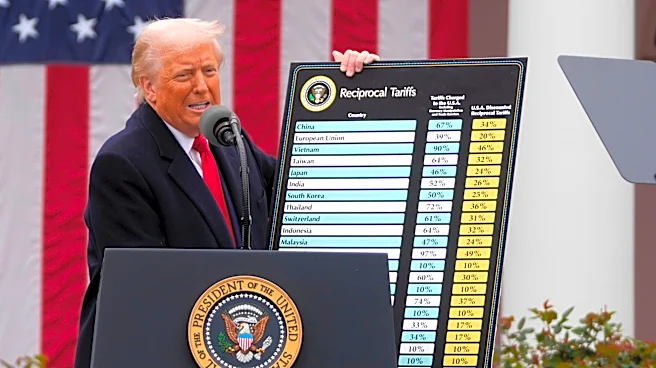
The Trump administration is issuing $100 billion in tariff refunds to importers following a Supreme Court ruling that deemed previous tariffs illegal. These tariffs, imposed under the International Emergency
Economic Powers Act, affected over 330,000 importers. Despite the refunds, the administration has introduced new tariffs on over 80 countries, citing forced labor concerns. This has led to lawsuits from 25 states, arguing that the new tariffs are a pretext to reimpose the previously struck-down duties. The administration maintains that the new tariffs are necessary to combat forced labor in global supply chains.
Why It's Important?
The refund process and the introduction of new tariffs have significant implications for international trade and U.S. economic policy. The refunds aim to alleviate financial burdens on businesses affected by the previous tariffs, but the new duties could increase costs for American consumers and businesses. The legal challenges from states highlight tensions between federal trade policies and state economic interests. The outcome of these lawsuits could influence future trade policies and the administration's ability to impose tariffs under similar justifications.
What's Next?
The legal battle over the new tariffs is expected to continue, with potential implications for U.S. trade relations and domestic economic policy. The Court of International Trade will play a crucial role in determining the legality of the new duties. Meanwhile, businesses and states will likely continue to advocate for policies that minimize economic disruptions. The administration's approach to addressing forced labor in supply chains may also evolve, potentially affecting international trade agreements and partnerships.