
What's Happening?
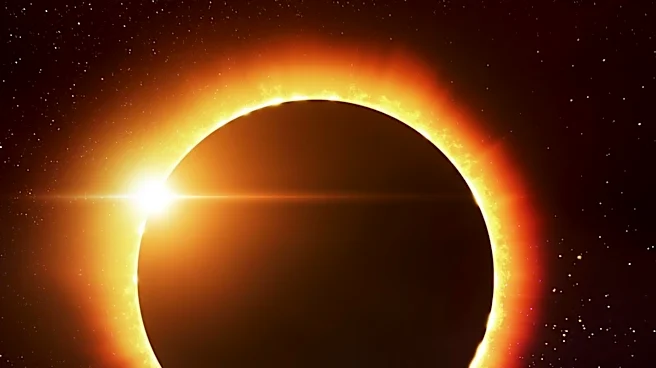
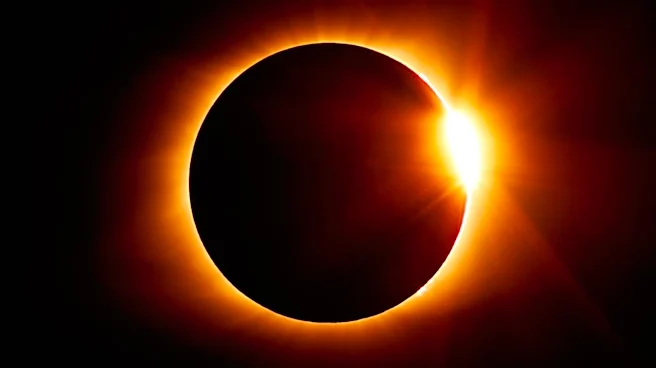
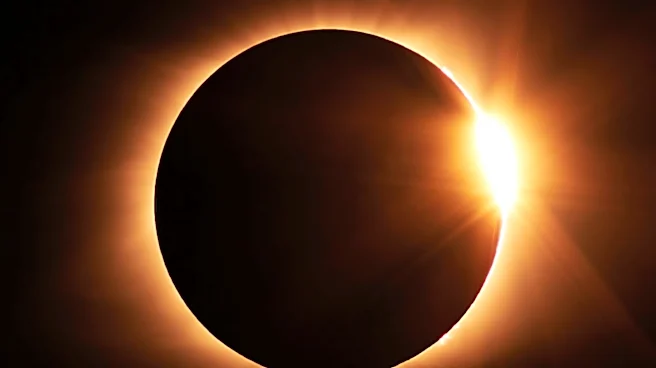
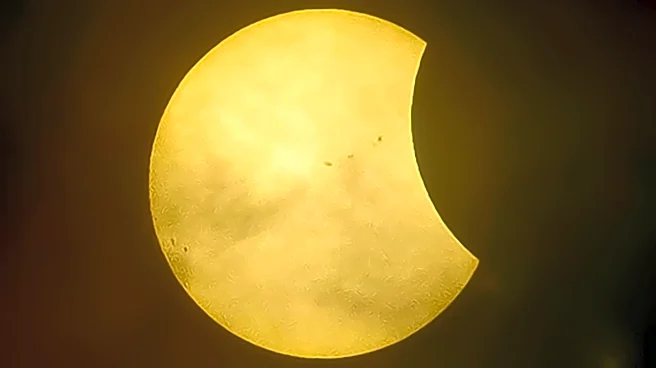
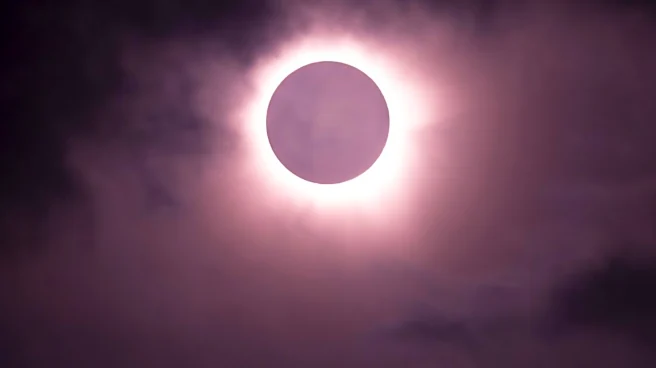
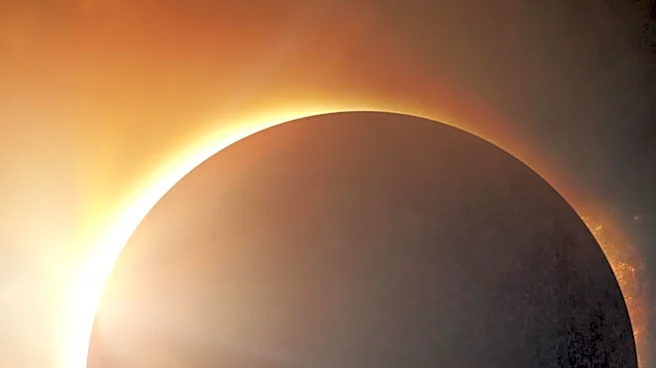
A total solar eclipse visible in Spain next week presents scientists with a rare opportunity to study the Sun's magnetic field, atmosphere, and solar weather. The eclipse will allow researchers to observe the Sun's corona and chromosphere, providing insights
into solar activity and its effects on Earth. This event is part of ongoing efforts to understand the Sun's behavior, which can impact satellite operations and power grids on Earth.
Why It's Important?
Studying solar eclipses is crucial for advancing our understanding of solar phenomena, which have direct implications for technology and infrastructure on Earth. Solar storms can disrupt communications, navigation systems, and power grids, making it essential to predict and mitigate their effects. The data collected during the eclipse will contribute to models that help scientists forecast solar activity, enhancing our ability to protect critical systems from solar-induced disruptions.
What's Next?
Following the eclipse, scientists will analyze the data collected to refine their models of solar activity. This research will inform future missions and technological developments aimed at improving our ability to monitor and respond to solar events. The findings may also influence policy decisions related to space weather preparedness and the protection of infrastructure from solar storms.