
What's Happening?
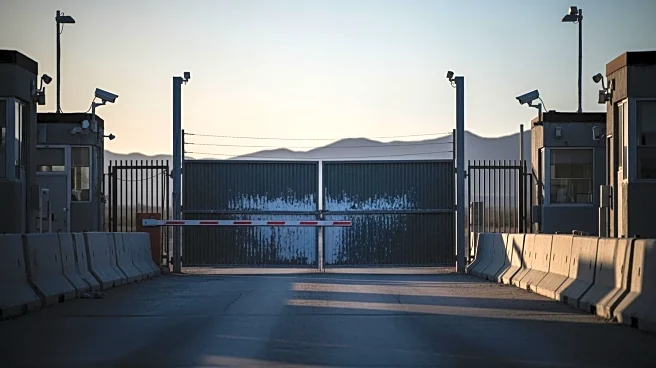
Israel is set to oversee the reopening of the Rafah border crossing between Gaza and Egypt, implementing remote monitoring and advanced screening measures. According to a report by Kan public broadcaster,
Israeli authorities will review travelers and inspect electronic devices moving in and out of Gaza. Although Israeli Defense Forces will not be stationed inside the facility, troops will operate nearby to prevent weapons smuggling. The European Union Border Assistance Mission, along with members of the Palestinian Authority’s intelligence service, will patrol the crossing. This development follows an agreement reached to restore two-way movement between Gaza and Egypt, as announced by UN Special Coordinator for the Middle East Peace Process, Nikolay Mladenov. The reopening comes after months of diplomatic efforts and a proposal by President Trump, which included reopening Rafah as part of a broader plan.
Why It's Important?
The reopening of the Rafah crossing is significant as it serves as a critical gateway for the movement of people and goods between Gaza and Egypt. This development could alleviate some of the economic and humanitarian pressures faced by Gaza's residents due to the blockade. However, the Israeli oversight and security measures may raise concerns about privacy and freedom of movement for Palestinians. The involvement of international and Palestinian authorities in monitoring the crossing reflects a collaborative approach to addressing security concerns while facilitating movement. The reopening aligns with broader diplomatic efforts to stabilize the region and could influence future negotiations and peace processes.
What's Next?
The Rafah crossing is expected to open next week, with logistical details still being finalized. The reopening will be closely monitored by international and regional stakeholders to ensure compliance with security protocols and to assess the impact on Gaza's population. Potential reactions from Palestinian groups and neighboring countries will be critical in shaping the future of the crossing's operations. The success of this initiative could pave the way for further easing of restrictions and improved relations between Israel, Egypt, and the Palestinian territories.