







What's Happening?
A recent opinion piece argues that the sustainability movement, which often promotes policies that constrain economic growth, may itself be a threat to sustainability. The article suggests that economic growth, historically, has improved human conditions
significantly, lifting billions out of poverty and increasing life expectancy. In contrast, the sustainability movement's past focus on overpopulation led to coercive policies with severe human costs. The current focus on climate change, the article argues, risks similar outcomes by imposing high costs for uncertain benefits.
Why It's Important?
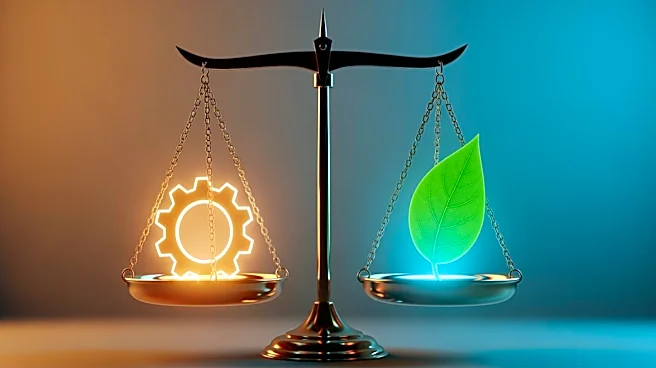
This debate highlights the complex relationship between economic growth and environmental sustainability. While economic growth has historically driven improvements in living standards, it also contributes to environmental challenges like climate change. The article suggests that policies aimed at mitigating climate change should be carefully evaluated to ensure they do not impose disproportionate costs relative to their benefits. This discussion is crucial as policymakers balance economic development with environmental protection, particularly in the context of global climate agreements and national policy decisions.
Beyond the Headlines
The critique of the sustainability movement raises questions about the effectiveness and ethical implications of past and current environmental policies. It suggests a need for a more nuanced approach that considers both economic and environmental outcomes. This could involve integrating technological innovation and human ingenuity into sustainability strategies, rather than relying solely on regulatory measures. The debate also underscores the importance of transparent and evidence-based policymaking in addressing global challenges.