






What's Happening?
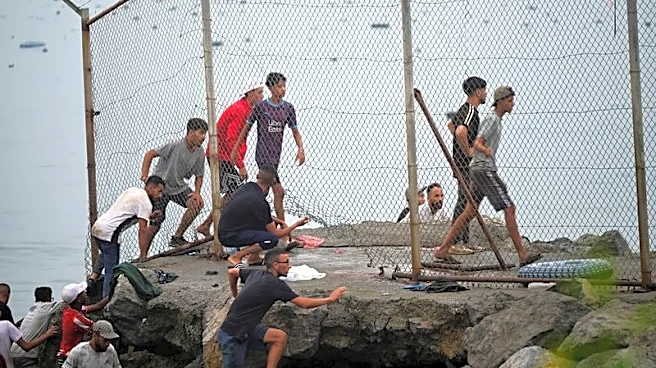
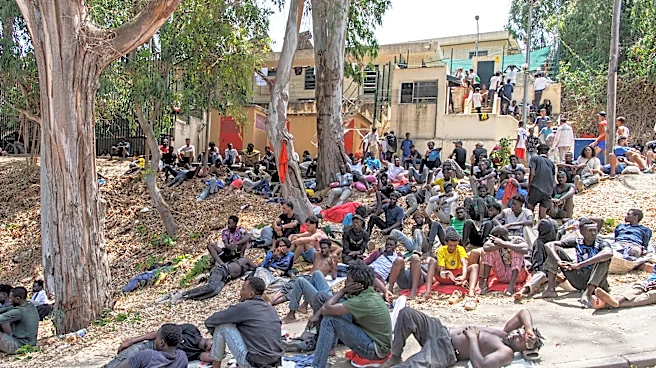
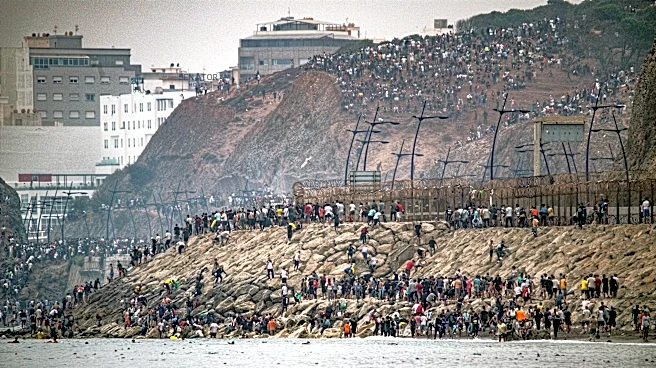
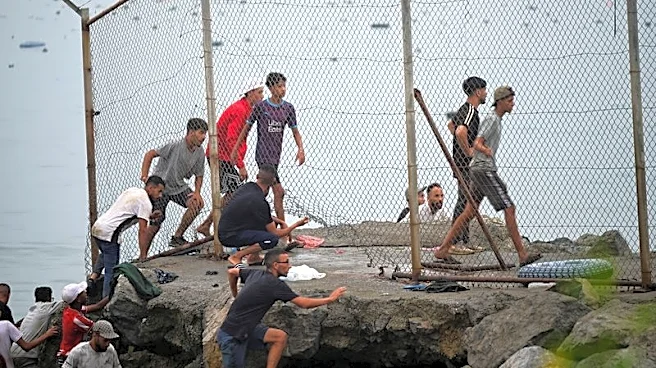
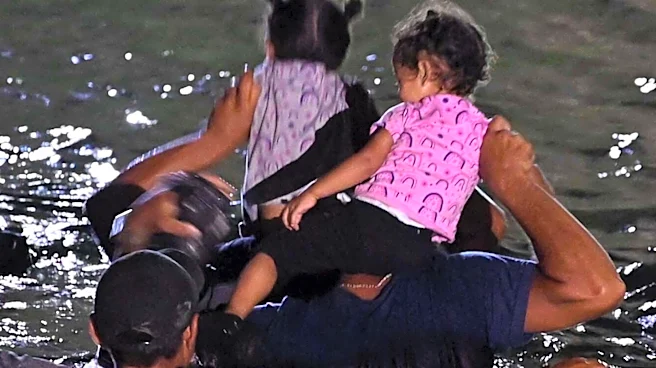
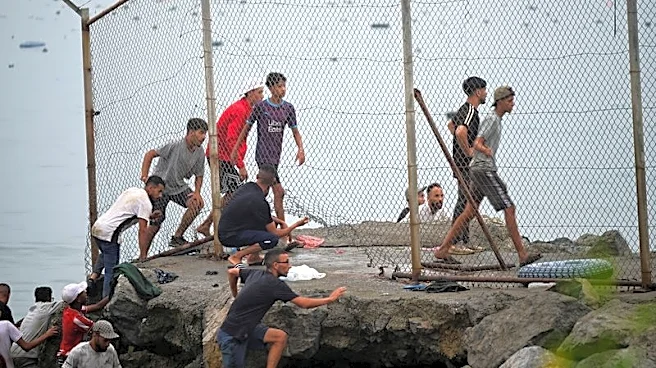
Spain is facing a significant migrant crisis in its North African exclave of Ceuta, where approximately 50,000 migrants have crossed into the territory. This influx has overwhelmed local authorities and resulted in at least 57 deaths during the crossings.
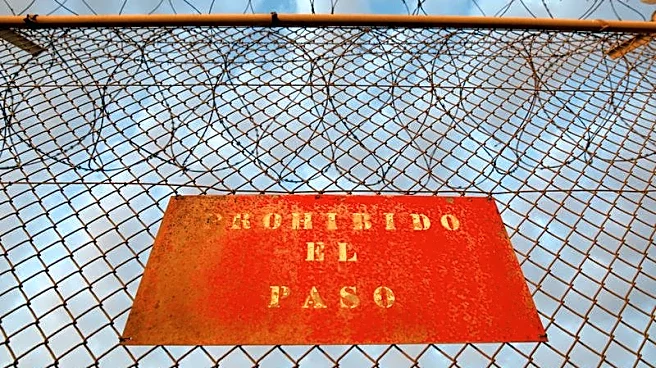
The crisis has been partly attributed to a recent Spanish Supreme Court ruling that prohibits the summary deportation of migrants arriving by sea without due process. This decision has been misinterpreted by human trafficking networks, leading migrants to believe they could not be deported if they reached Spanish territory by sea. The ruling specifically applies to migrants intercepted while swimming into Ceuta and Melilla, who have previously been subject to immediate removal to Morocco without formal proceedings.
Why It's Important?
The situation in Ceuta has broader implications for European immigration policies and Spain's diplomatic relations. The crisis has become a political flashpoint, with Spain's opposition accusing the government of losing control over its borders. The ruling has also prompted other European countries, such as Italy and France, to reinforce border checks, highlighting the tension between national security and humanitarian obligations. Spain's approach contrasts with the tightening immigration policies in other European countries, as it recently announced a regularization program for undocumented migrants. This crisis underscores the complex interplay between legal rulings, human trafficking, and migration policies, affecting both domestic and international political landscapes.
What's Next?
In response to the crisis, Spain plans to install floating barriers around Ceuta to comply with the Supreme Court ruling while enabling immediate returns. The Spanish government is also working to expel migrants who entered Ceuta, with many already returned to Morocco. The situation is likely to prompt further discussions among European Union leaders about strengthening external borders and addressing the root causes of migration. The crisis may also influence upcoming elections in European countries, as political leaders navigate the balance between security and humanitarian considerations.
Beyond the Headlines
The Ceuta migrant crisis highlights the ongoing challenges of managing migration flows in Europe, particularly in regions with complex legal and political contexts. The situation in Ceuta is not only a humanitarian issue but also a diplomatic one, given Morocco's claims of sovereignty over the territory. The crisis also reflects broader economic and social pressures in North Africa, where high unemployment rates drive young people to seek opportunities in Europe. The Spanish government's regularization program for undocumented migrants is a pragmatic response to an aging population and labor shortages, but it also raises questions about the long-term sustainability of such policies in the face of increasing migration pressures.