


What's Happening?
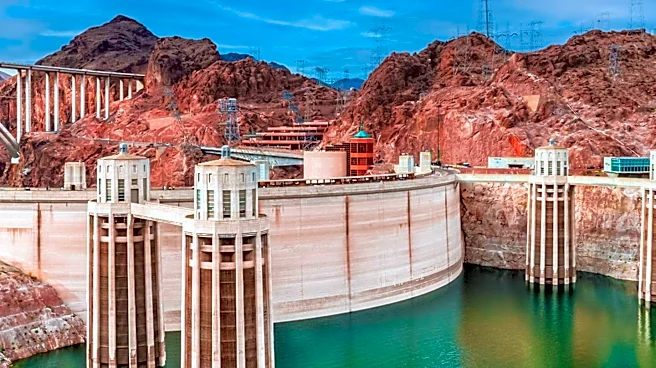
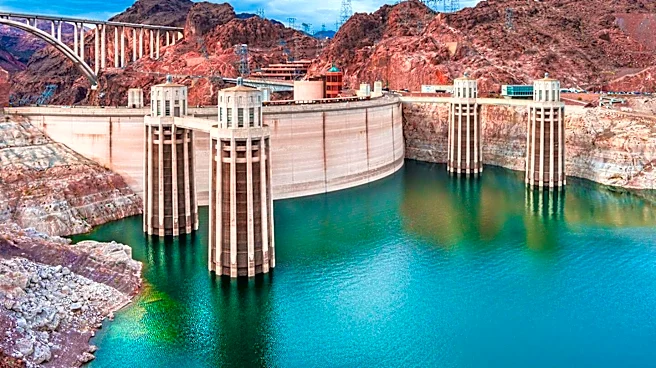
The Hoover Dam, a major tourist attraction located in Black Canyon on the Colorado River near Boulder City, Nevada, remains closed to visitors as federal officials and contractors assess an equipment issue with the dam's cableway system. The closure was
first announced on Monday evening, and as of Wednesday, no reopening date has been provided. The U.S. Bureau of Reclamation, responsible for the dam's operations, has stated that the closure is due to an unexpected movement of the cableway carriage during routine maintenance, which placed additional stress on the system components. This cableway system, which weighs 150 tons, is crucial for moving large equipment and materials across the river. Despite the closure to visitors, the dam and its power plant continue to operate normally.
Why It's Important?
The closure of the Hoover Dam, which attracts approximately 7 million visitors annually, has significant implications for tourism and local businesses that rely on the influx of visitors. The dam is not only a critical piece of infrastructure for water and power supply but also a historical landmark that draws tourists from around the world. The ongoing closure could lead to economic losses for the surrounding areas, particularly for businesses that cater to tourists. Additionally, the incident highlights the importance of maintaining and upgrading infrastructure to prevent unexpected closures and ensure safety. The situation underscores the challenges faced by federal agencies in managing aging infrastructure while balancing public access and safety.
What's Next?
Federal officials have not provided a timeline for when the Hoover Dam will reopen to visitors. The U.S. Bureau of Reclamation is working with contractors to evaluate and address the equipment issue. Until the cableway carriage is safely repositioned and the system is deemed secure, visitor access will remain restricted. The ongoing assessment and repair efforts will determine the next steps, and updates are expected as the situation develops. Stakeholders, including local businesses and tourism operators, are likely to monitor the situation closely, hoping for a swift resolution to minimize economic impacts.