



What's Happening?
Astronomers have directly detected the first-ever radio emission from a planet outside our solar system, specifically from the exoplanet Beta Pictoris b. This discovery, detailed in a new paper awaiting peer review, traces repeating radio bursts originating
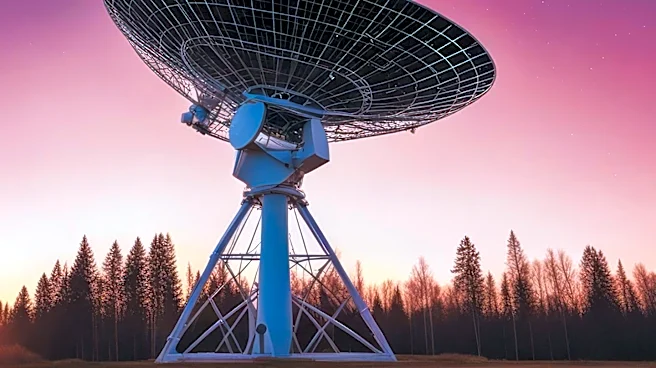
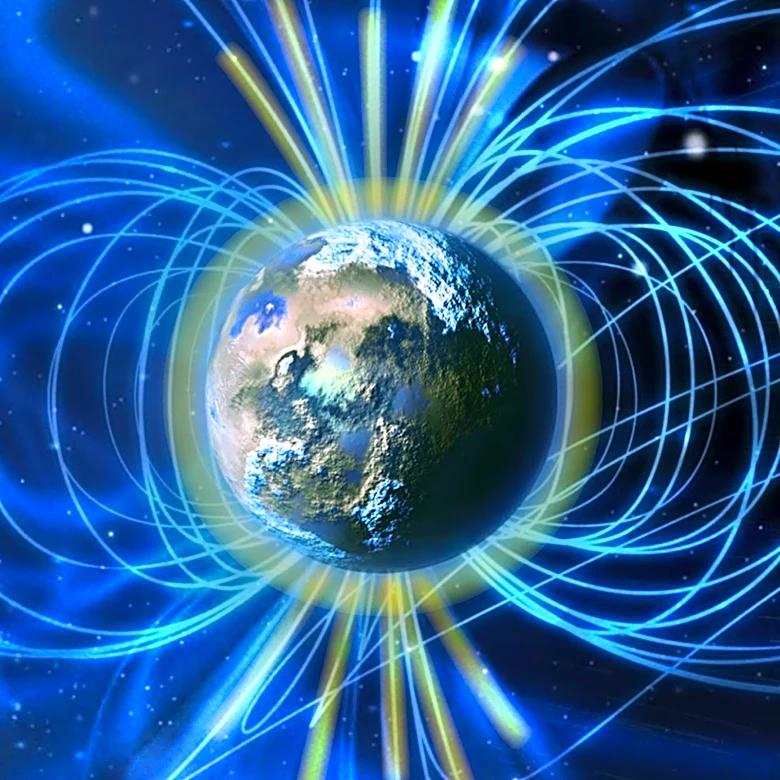
from the gas giant, which is located 63 light-years from Earth and is approximately 12 times the mass of Jupiter. According to Edo Berger, a professor of astronomy at Harvard University, the signal is not indicative of intelligent life but rather evidence of a colossal magnetic field. The radio emission is produced by processes associated with the planet's magnetic field, similar to Earth's auroras, which are spectacular displays caused by magnetic storms involving charged particles. The Beta Pictoris system is relatively young, about 23 million years old, and Beta Pictoris b was discovered in 2008. The researchers utilized MeerKAT, an array of 64 radio telescope dishes in South Africa, to make this unexpected detection.
Why It's Important?
This detection is significant because it provides a new method for understanding the structure and atmospheres of exoplanets. The presence of an incredibly strong magnetic field, estimated to be at least 200 times stronger than Jupiter's, suggests that exoplanets can possess magnetic fields far more powerful than previously assumed. Magnetic fields act as natural shields, protecting planetary atmospheres from being stripped away by stellar winds, similar to how Earth's magnetic field safeguards our planet. This finding challenges existing assumptions about exoplanet magnetic fields, which were thought to resemble Jupiter's more closely, implying lower frequency radio emissions. The ability to localize the emission to the planet itself, separate from its host star, marks a crucial advancement in exoplanetary research, offering a unique 'view' of planets beyond our solar system.
What's Next?
The research paper is currently awaiting peer review, a process that will involve independent experts assessing the findings over the next few months. If the discovery holds up under scrutiny, it will represent a significant step forward in understanding exoplanetary behavior. Scientists not involved in the research, such as Jonathan Nichols, a professor in planetary auroras at the University of Leicester, emphasize that auroral radio emissions are vital for understanding how celestial objects interact with their local space environment and for inferring properties that cannot be measured otherwise. The research team has requested additional telescope time to further study Beta Pictoris b, aiming to unravel puzzles such as the reason behind its exceptionally strong magnetic field. This continued investigation could lead to a deeper understanding of planetary formation and evolution.
Beyond the Headlines
The detection of radio emissions from Beta Pictoris b opens up new avenues for exoplanet characterization, moving beyond traditional observational methods. The finding highlights the potential for radio astronomy to reveal fundamental properties of distant worlds, such as the strength of their magnetic fields, which are crucial for habitability. A strong magnetic field could indicate a planet's ability to retain an atmosphere and potentially support life, even if the current detection is not directly related to biological activity. This research also underscores the value of 'fishing expeditions' in scientific exploration, where unexpected discoveries can challenge established paradigms and lead to breakthroughs. The ongoing peer review process emphasizes the scientific community's commitment to rigorous validation, ensuring the reliability and impact of such groundbreaking claims.