







What's Happening?
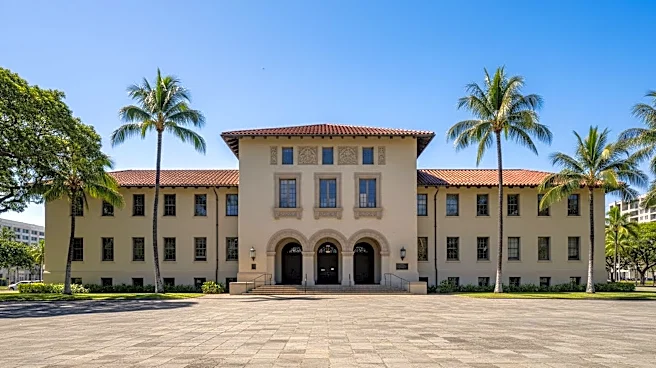
Vermont state officials, under the direction of Governor Phil Scott, have installed bird-noise devices at the historic Pavilion building within the Capitol complex in Montpelier. This measure is an attempt to deter individuals from gathering on the porch
of the building, where issues such as fights, discarded syringes, human waste, and a fire have been reported. The devices are programmed to emit bird squawking noises between 11 p.m. and 4 a.m. This initiative follows previous unsuccessful attempts to address the problem, including the placement of portable toilets and signs asking people not to gather. Vermont Secretary of Administration Sarah Clark stated that the effort aims to prevent undesirable behavior in public spaces used by many. Governor Scott also recently deployed state troopers to Burlington to address quality-of-life issues there, emphasizing the economic importance of Burlington's reputation.
Why It's Important?
This novel approach by Vermont state officials highlights the growing challenges faced by urban centers in managing public spaces and addressing homelessness and related quality-of-life issues. The deployment of bird-noise devices represents an unconventional, non-confrontational method to deter loitering, contrasting with the more traditional law enforcement presence seen in Burlington. This strategy could set a precedent for other municipalities grappling with similar problems, offering an alternative to direct police intervention. However, local homeless advocates, such as Another Way Executive Director Ken Russell, criticize the measure as an 'absurd response' that merely displaces the problem rather than solving the systemic issues of homelessness. The effectiveness and ethical implications of using such deterrents in public spaces will be closely watched, potentially influencing future urban management policies and the debate around compassionate solutions versus public order maintenance.
What's Next?
The bird-noise devices will continue to operate between 11 p.m. and 4 a.m. at the Capitol complex. The effectiveness of this measure in deterring loitering and improving public order will be monitored by state officials. Local homeless providers and advocates are likely to continue voicing their concerns, potentially pushing for more comprehensive solutions to homelessness and related issues in Montpelier and Burlington. As colder weather approaches, there will be increased pressure on providers in both cities to secure adequate shelter capacity, which could further highlight the limitations of deterrent-based strategies. The ongoing debate between maintaining public order and addressing the root causes of homelessness will likely intensify, potentially leading to policy discussions about funding for social services, housing initiatives, and mental health support.
Beyond the Headlines
The use of bird-noise devices in Montpelier raises deeper questions about how society addresses complex social issues like homelessness and public space management. This approach, while seemingly benign, can be seen as a form of 'hostile architecture' or 'defensive design,' which aims to make public spaces uncomfortable for certain groups, effectively pushing them out of sight rather than addressing their needs. This strategy can dehumanize individuals experiencing homelessness and further marginalize them. It also reflects a tension between the desire for public order and the imperative for social responsibility. The long-term implications could include a further erosion of public trust between authorities and vulnerable populations, and a shift towards less empathetic urban planning. The incident underscores the need for a balanced approach that combines public safety with social welfare, fostering inclusive communities rather than simply displacing problems.