









What's Happening?
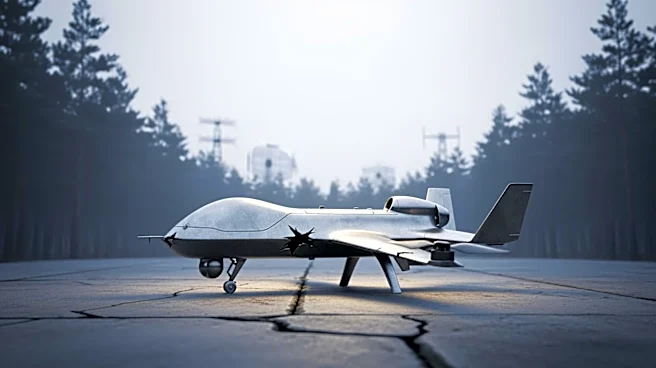
President Volodymyr Zelensky has disclosed the extent of Russia's aerial attacks on Ukraine, revealing that nearly 4,000 strike assets were deployed against civilian infrastructure in a single week. The attacks included over 2,300 strike drones, 1,560
guided aerial bombs, and 108 missiles targeting non-military sites such as residential buildings and energy hubs. Despite Ukraine's air defense efforts, some attacks resulted in civilian casualties and infrastructure damage. In response, Ukraine has received a new IRIS-T air defense launcher from Germany, enhancing its regional defense capabilities. Additionally, Sweden has committed to providing advanced Saab JAS 39 Gripen fighter aircraft to bolster Ukraine's air force.
Why It's Important?
The ongoing Russian bombardment underscores the severe threat to Ukraine's civilian infrastructure and the broader implications for regional stability. The delivery of new air defense systems from Germany and Sweden represents a significant boost to Ukraine's defensive capabilities, potentially altering the strategic balance in the region. These developments highlight the international community's support for Ukraine and the importance of maintaining robust defense systems to protect civilian lives and infrastructure. The situation also emphasizes the need for continued international cooperation to counteract Russian aggression and support Ukraine's resilience.
What's Next?
Ukraine is likely to continue strengthening its air defense systems with international support, focusing on securing anti-ballistic capabilities to protect its economy and industrial sectors. The ongoing conflict may prompt further international diplomatic and military responses, with potential implications for NATO and European security policies. The situation remains dynamic, with Ukraine seeking additional support from its allies to counter Russian military actions and stabilize the region.
Beyond the Headlines
The conflict in Ukraine raises broader ethical and legal questions about the targeting of civilian infrastructure in warfare. The international community's response to these actions could set precedents for future conflicts and influence global norms regarding military engagement. Additionally, the conflict may drive long-term shifts in defense strategies and alliances, as countries reassess their security needs in light of evolving threats.