






What's Happening?
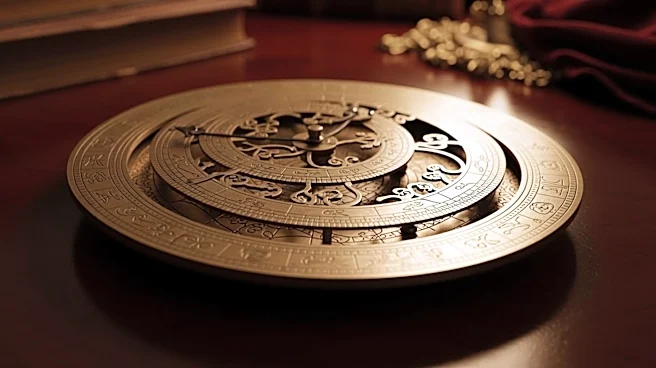
A remarkable 17th-century brass astrolabe, once part of the royal collection of Jaipur in India, is set to be auctioned at Sotheby's in London. This astrolabe, described as possibly the largest of its kind, was part of the collection of Maharaja Sawai
Man Singh II and later owned by his wife, Maharani Gayatri Devi. The instrument, crafted in Lahore by the renowned 'Lahore School' of astrolabe makers, features intricate details such as 94 inscribed cities and 38 star pointers. It reflects the scientific interests of the Mughal court and is expected to attract significant interest from museums and collectors, with an estimated value of £1.5-2.5 million.
Why It's Important?
The auction of this astrolabe highlights the historical and cultural significance of scientific instruments from the Mughal era. It showcases the advanced craftsmanship and scientific curiosity of the time, offering insights into the cross-cultural exchanges between Persian and Indian traditions. The sale also underscores the growing interest in historical artifacts, which can provide valuable context for understanding the development of scientific thought and technology. For collectors and museums, acquiring such a piece represents an opportunity to preserve and display a unique artifact that bridges art, science, and history.