
What's Happening?
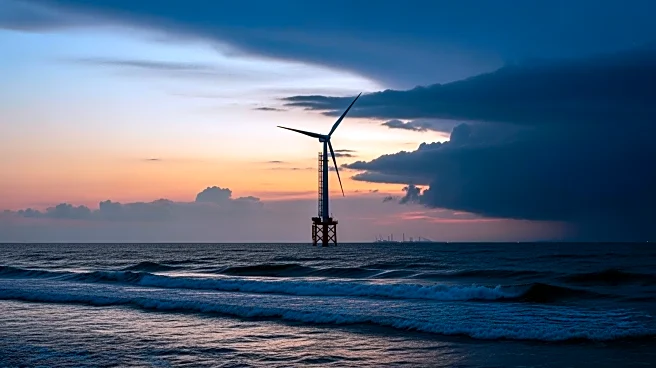
In December 2025, the Trump Administration placed a hold on offshore wind projects from New England to Virginia, pausing development indefinitely. This decision comes amid ongoing discussions about U.S.
maritime policy, particularly the Jones Act, which has been cited by European offshore wind developers as a barrier to project completion. These developers have criticized the Act for causing delays and cost overruns, although U.S. stakeholders argue that the real issues lie in unrealistic pricing and immature supply chains. The Northeast, a hub for offshore wind, faces high electricity prices, with states like Massachusetts and Connecticut experiencing rates significantly above the national average. The region's energy policies, including opposition to natural gas pipeline expansions, have further complicated the energy landscape.
Why It's Important?
The halt on offshore wind projects underscores the complex interplay between federal policies, state energy strategies, and international business interests. The decision affects the Northeast's energy security and economic landscape, as the region grapples with high electricity costs and limited energy infrastructure. The Jones Act, a longstanding maritime law, has become a focal point in these discussions, with its implications for U.S.-flag vessel requirements impacting offshore wind development. The situation highlights the need for transparent communication and realistic planning among stakeholders to address energy challenges and leverage domestic resources effectively.
What's Next?
Future developments may involve negotiations between the Trump Administration and Northeast states to find a balanced approach to energy policy that accommodates both offshore wind and natural gas needs. Stakeholders may need to reassess their strategies, considering the potential for new deals that align domestic energy production with maritime policy and grid reliability. The outcome of these discussions could shape the region's energy landscape and influence national energy policy.
Beyond the Headlines
The ongoing debate over the Jones Act and offshore wind development reflects broader tensions between federal and state energy policies. It raises questions about the role of international companies in U.S. energy markets and the need for cohesive strategies that integrate renewable energy with existing infrastructure. The situation also highlights the importance of addressing regulatory and logistical challenges to foster a sustainable energy future.