




What's Happening?
Minot recently hosted its first-ever Carve Wars, an art competition where five artists created large-scale sculptures from trees previously cut down for the city's flood management efforts. The event, held from October 6-10 at the Minot Moose Lodge, allowed
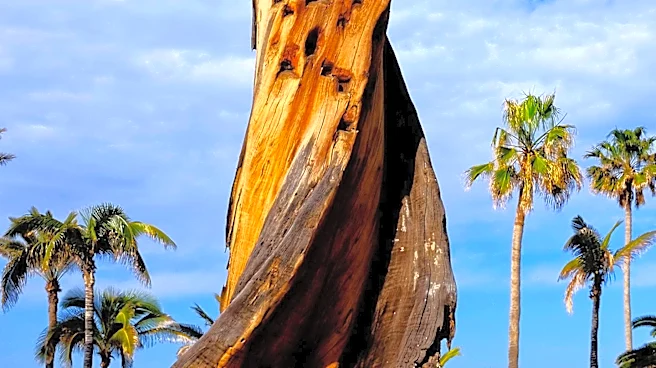
the public to observe the artists at work. Unlike typical Carve Wars competitions that prioritize speed, Minot's event emphasized craftsmanship, with the winner determined by public vote. Joe Wanel, the creator of Carve Wars, noted the positive public engagement. The five sculptures, which include campfire bears, a raptor, a Native American figure, an angel, and a swimming fish, are slated for permanent display around the city. The initiative is sponsored by the Minot Area Council of the Arts and 2000 Trees for Minot, aiming to repurpose waste material into lasting artistic contributions for the community.
Why It's Important?
This event is important as it demonstrates an innovative approach to urban waste management and community beautification. By transforming trees removed for flood control into public art, Minot is not only mitigating waste but also enriching its cultural landscape. This initiative provides a sustainable model for other cities facing similar challenges, showcasing how necessary infrastructure projects can simultaneously foster artistic expression and community engagement. The permanent display of these sculptures will enhance public spaces, potentially boosting local tourism and civic pride. Furthermore, the focus on craftsmanship over speed in the competition highlights a dedication to quality and longevity in public art, ensuring that these pieces will serve as enduring landmarks and cultural assets for Minot residents and visitors alike.
What's Next?
Following the conclusion of the Carve Wars competition, the five large-scale sculptures will be permanently installed in various locations around Minot. The exact placement of each sculpture will likely be determined by the sponsoring organizations, the Minot Area Council of the Arts and 2000 Trees for Minot, in collaboration with city officials. The smaller sculptures created during the Quick Carve segment of the event were put up for auction, with proceeds likely supporting future art initiatives or the artists themselves. The success of this inaugural Carve Wars in Minot could pave the way for future iterations of the event, potentially establishing it as an annual tradition that continues to contribute to the city's public art collection and community engagement efforts.
Beyond the Headlines
The Carve Wars event in Minot carries deeper implications beyond its immediate artistic and environmental benefits. It underscores a growing trend in urban planning to integrate sustainability with cultural development, transforming what might otherwise be considered waste into valuable community assets. This approach fosters a sense of collective ownership and appreciation for public spaces, as residents witness the creation of art from local resources. Ethically, it promotes responsible resource management and highlights the potential for creative solutions to practical urban problems. Culturally, the diverse themes of the sculptures—ranging from wildlife to Native American figures and angels—reflect a broad appeal and potential to resonate with various segments of the community, contributing to a richer, more inclusive public narrative through art.