


What's Happening?
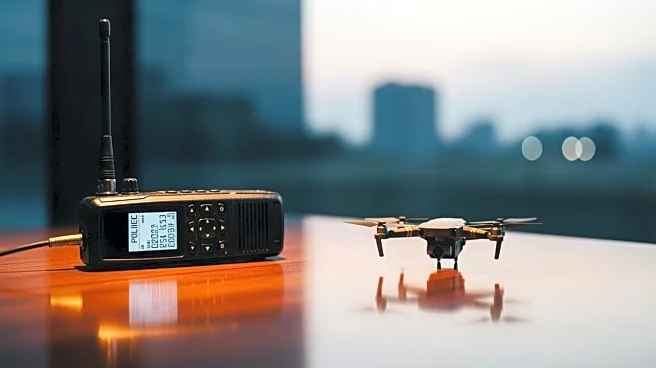
President Trump has signed the National Defense Authorization Act (NDAA) into law, which includes a provision allowing law enforcement to disable drones at public gatherings. This legislation, part of a record $901 billion military spending package for 2026,
addresses concerns from police and professional sports organizations about drone interference at major events. The new law is particularly relevant as the U.S. prepares to host significant events such as Super Bowl LX, the FIFA Men's World Cup, and the 2028 Los Angeles Olympics. The ability to disable drones is seen as a necessary measure to ensure safety and security at these large-scale gatherings.
Why It's Important?
The authorization for police to disable drones at public events is a significant development in public safety and security. Drones have become increasingly popular, raising concerns about their potential misuse in crowded areas. By granting law enforcement the power to neutralize drones, the law aims to prevent disruptions and enhance security at major events. This move is likely to be welcomed by event organizers and security professionals who have been advocating for such measures. However, it also raises questions about privacy and the extent of police powers, which could lead to debates about civil liberties and the balance between security and personal freedoms.
What's Next?
As the law takes effect, law enforcement agencies will likely begin implementing protocols and training to effectively manage drone threats at public gatherings. Event organizers and security teams will need to coordinate closely with police to ensure the new measures are integrated smoothly into existing security plans. Additionally, there may be legal challenges or calls for oversight to ensure the powers are not misused. Public awareness campaigns might also be necessary to inform drone operators about the new regulations and the potential consequences of violating them.