




What's Happening?
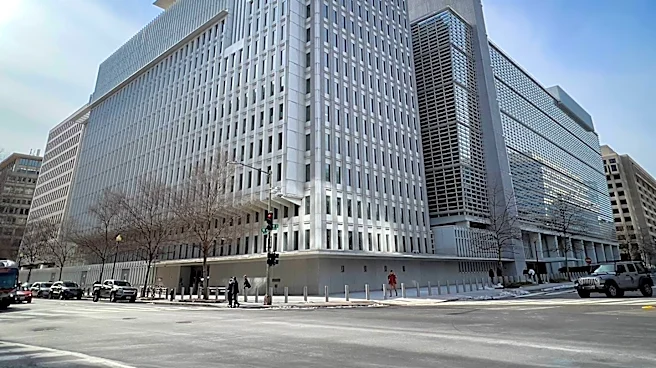
The World Bank Group is actively recruiting a Conference Associate for its headquarters in Washington, DC. This role is crucial for supporting the Senior Program Manager (SPM) in overseeing Conference Services both at the HQ and global locations. The position
involves coordinating event planning, set-up, catering, AV/technology, security, facilities, and interpretation to ensure responsive service delivery. The Conference Associate will also contribute to annual work programs, operating plans, and projects, including logistical support for the WBG/IMF Annual and Spring Meetings. Furthermore, the role entails managing event-management platforms, ensuring data accuracy, developing reports on event volumes and service demand, and providing user support and training for these systems. The World Bank, a leading development institution, has recently been recognized for its improved aid transparency, ranking second among 34 organizations in the 2026 Aid Transparency Index. Its fund for low-income countries, the International Development Association (IDA), scored 97.1 out of 100, an increase from 92.2 in 2024. Despite these operational improvements, the World Bank's 2026 Poverty, Prosperity, and Planet Report indicates that progress on extreme poverty has stalled and is likely to reverse in the coming decade.
Why It's Important?
This recruitment highlights the World Bank's ongoing commitment to operational efficiency and effective global coordination, even as it grapples with significant development challenges. The Conference Associate position, based in Washington, DC, is integral to facilitating the high-level meetings and collaborations that drive the World Bank's mission. The institution's improved ranking in aid transparency underscores its efforts to enhance accountability and the effective use of development funds, which is critical for maintaining donor confidence and maximizing impact in recipient countries. However, the grim projections from the Poverty, Prosperity, and Planet Report signal a critical juncture for global development. The potential reversal in extreme poverty progress could have profound implications for international stability, migration patterns, and the global economy, particularly impacting vulnerable populations and developing nations. The World Bank's ability to effectively manage its internal operations and external engagements, supported by roles like the Conference Associate, directly influences its capacity to address these escalating global crises.
What's Next?
The World Bank will continue its efforts to streamline project implementation through initiatives like Development-Ready (D-Ready) to mitigate delays. The successful candidate for the Conference Associate role will play a part in these ongoing operational improvements, ensuring that the logistical backbone for critical meetings and decision-making processes remains robust. Given the concerning trends identified in the Poverty, Prosperity, and Planet Report, the World Bank is expected to intensify its focus on strategies to combat extreme poverty and address the impacts of climate change. This may involve re-evaluating existing programs, forging new partnerships, and advocating for increased international cooperation and funding. The institution's commitment to transparency, as evidenced by its high ranking in the Aid Transparency Index, will likely be a cornerstone of its future engagements, aiming to build trust and demonstrate the efficacy of its interventions in a challenging global environment.
Beyond the Headlines
The World Bank's dual focus on internal operational excellence and external development challenges reveals a broader tension within large international organizations: the need for efficient administration to support ambitious global goals. The emphasis on AI literacy and the use of approved generative AI in the Conference Associate role points to a growing trend of integrating advanced technologies to enhance productivity and decision-making within such institutions. This technological adoption, however, comes with ethical considerations regarding data protection, accuracy, and human oversight, which the World Bank explicitly acknowledges. The stagnation in extreme poverty reduction, as highlighted by the World Bank's report, suggests that traditional development models may be insufficient to address current global complexities. This could trigger a re-evaluation of fundamental approaches to aid, economic development, and climate action, potentially leading to innovative, albeit challenging, shifts in global policy and resource allocation. The role of institutions like the World Bank in navigating these multifaceted challenges will be increasingly scrutinized.