



What's Happening?
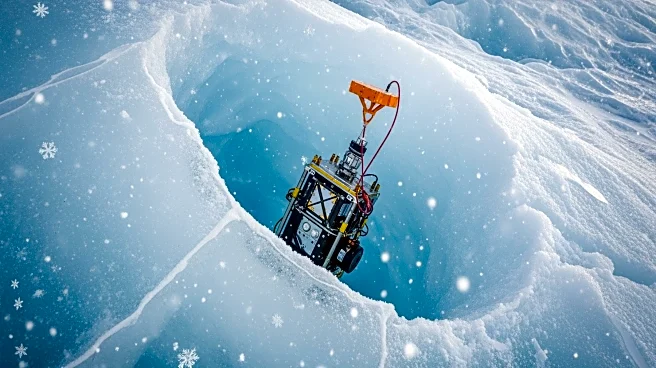
A research mission led by the British Antarctic Survey (BAS) and the Korea Polar Research Institute (KOPRI) aimed at studying the Thwaites Glacier, also known as the 'Doomsday Glacier,' encountered a significant setback. The team attempted to drill into
the glacier to gather data on ocean conditions beneath it, which are believed to contribute to ice loss. However, the instruments became lodged in the ice, forcing the mission to be abandoned. Despite this, the data collected before the setback provided valuable insights into the glacier's melting process and its potential impact on global sea levels.
Why It's Important?
The Thwaites Glacier is a critical area of study due to its potential to significantly raise global sea levels if it collapses. Understanding the conditions beneath the glacier is essential for predicting future changes and preparing for potential global impacts. The setback in the research mission highlights the challenges of conducting scientific exploration in harsh environments like Antarctica. Despite the difficulties, the data collected is crucial for advancing knowledge about the glacier's instability and the factors driving ice loss. This research is vital for informing global climate policy and strategies to mitigate the effects of rising sea levels.
What's Next?
The research team plans to return to Thwaites Glacier for further studies, aiming to overcome the challenges faced during this mission. The data collected will be analyzed to refine future research efforts and improve understanding of the glacier's dynamics. Continued monitoring and exploration are necessary to develop more accurate models of sea level rise and to inform global climate adaptation strategies. The scientific community will likely collaborate on new approaches to ensure the success of future missions in this critical area.