
What's Happening?
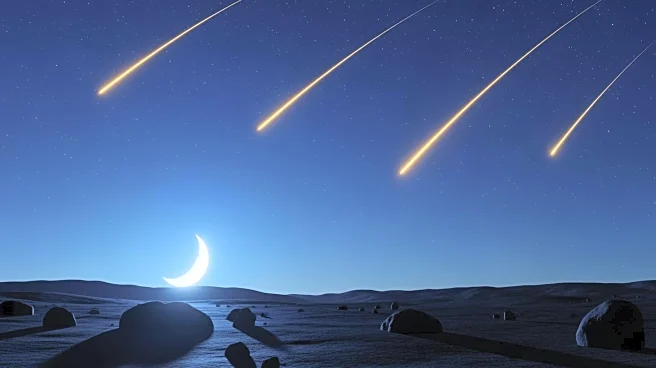
December 2025 is a significant month for lunar activities, with the waning crescent moon providing darker skies ideal for observing the Geminid meteor shower. The New Moon on December 19 will further enhance
skywatching conditions by reducing moonlight interference. NASA is also advancing its lunar exploration efforts, conducting tests to understand the impact of rocket exhaust on lunar dust, which is crucial for future Moon landings. Additionally, NASA has selected two instruments for the Artemis IV mission to study the lunar environment, emphasizing the ongoing preparation for more ambitious lunar surface operations.
Why It's Important?
The events of December 2025 underscore the dual focus on both astronomical observation and lunar exploration. The Geminid meteor shower, enhanced by the darker skies, offers a unique opportunity for skywatchers, while NASA's tests and instrument selections are critical for ensuring the safety and success of future lunar missions. These developments highlight the importance of understanding lunar conditions, which is essential for the sustainability of human activities on the Moon. The advancements in lunar science and technology also reflect broader goals of space exploration and the potential for future human settlement.
What's Next?
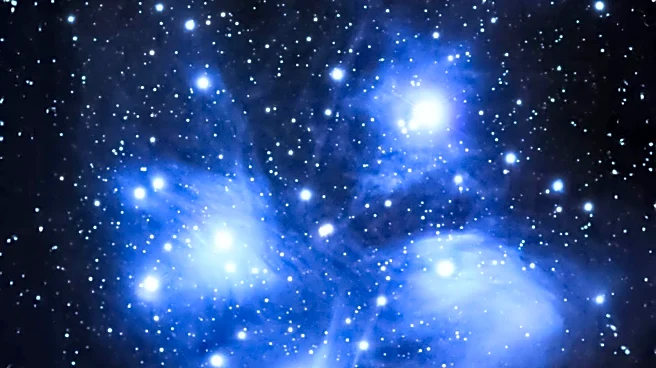
Following the New Moon on December 19, skywatchers can expect optimal conditions for observing deep-sky objects. NASA's ongoing tests and the deployment of new instruments during the Artemis IV mission will continue to provide valuable data for future lunar missions. The focus on lunar dust and environmental studies will likely lead to improved safety protocols and mission planning, paving the way for more frequent and sustainable lunar exploration. These efforts are part of a larger strategy to establish a long-term human presence on the Moon.