





What's Happening?
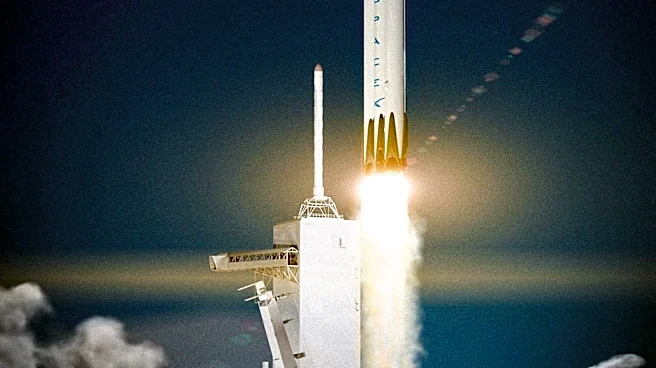
China has successfully launched a pair of secretive satellites, TJS-27A and TJS-27B, using a Long March 6A rocket from the Taiyuan Satellite Launch Center. These satellites are intended for satellite communication, broadcasting, and data transmission,
with additional technology experiments and verifications. The U.S. Space Force tracked the satellites in orbits characteristic of electronic intelligence satellites. This launch is part of China's broader efforts to enhance its space capabilities, including the deployment of a new generation of data relay satellites, Tianlian-3, to support communication for crewed spacecraft and the Tiangong space station.
Why It's Important?
The launch signifies China's growing ambitions in space technology and its strategic focus on enhancing its military and communication capabilities. The deployment of these satellites could improve China's ability to gather electronic and signals intelligence, potentially impacting global security dynamics. The advancements in space technology also reflect China's commitment to becoming a leading space power, challenging the dominance of the United States and other nations in space exploration and military applications.
What's Next?
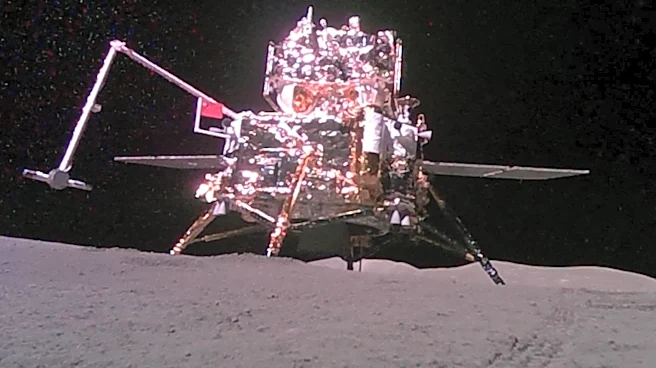
China is expected to continue its aggressive space launch schedule, aiming to exceed 100 launches in a calendar year for the first time. The country is also preparing for significant missions, including lunar exploration and the construction of space infrastructure. These developments may prompt other nations to accelerate their own space programs to maintain strategic parity. The international community will likely keep a close watch on China's space activities, given their potential implications for global security and technological competition.